


Habur Stone From Jaisalmer: From Ancient Fossils to Modern Home Décor
What if a decorative object in your home could also tell a story about the Earth’s distant past?
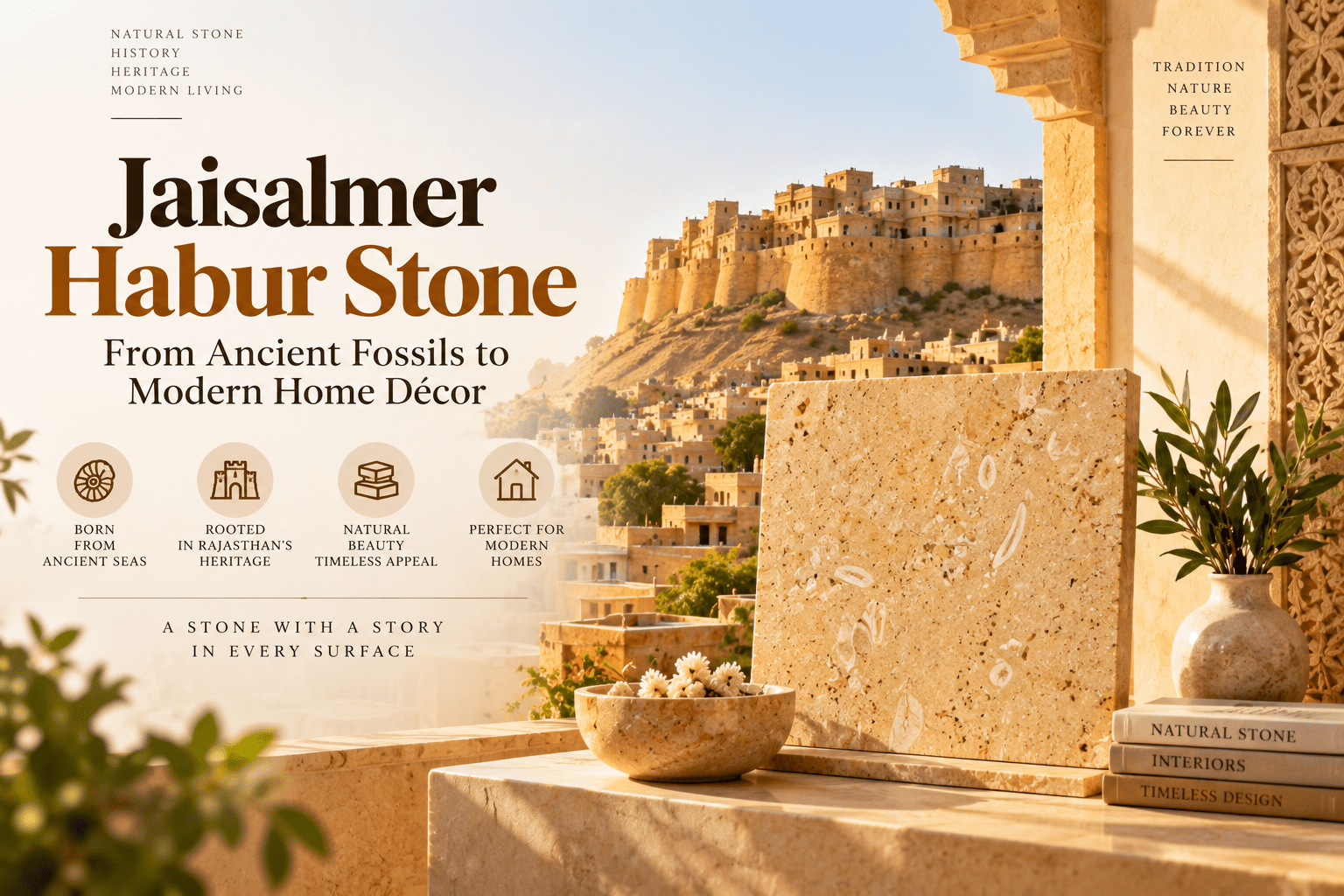
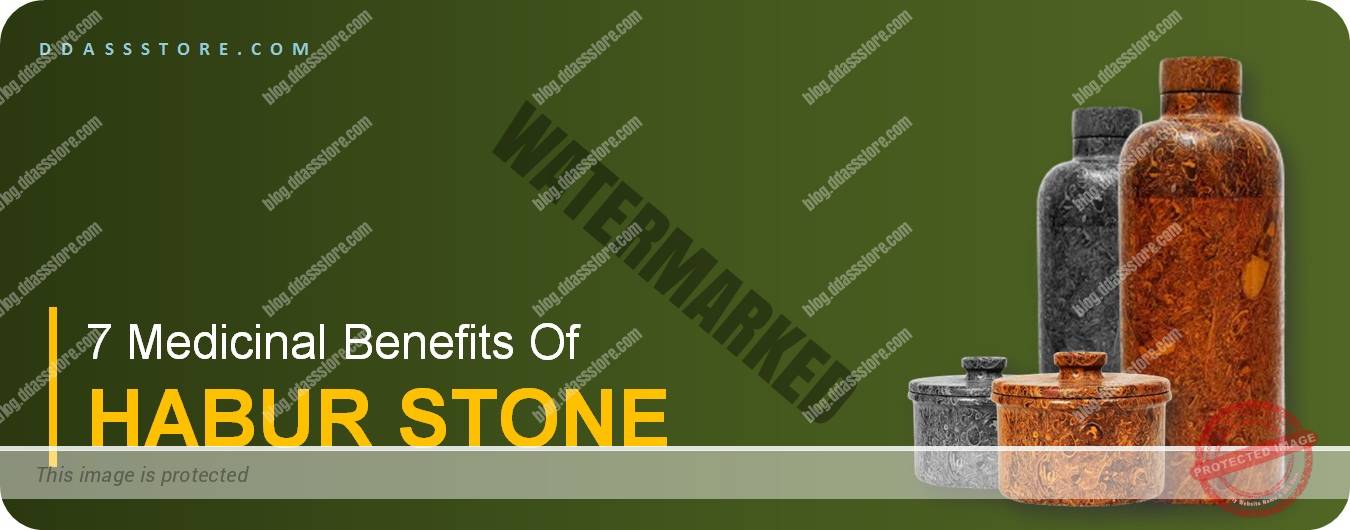
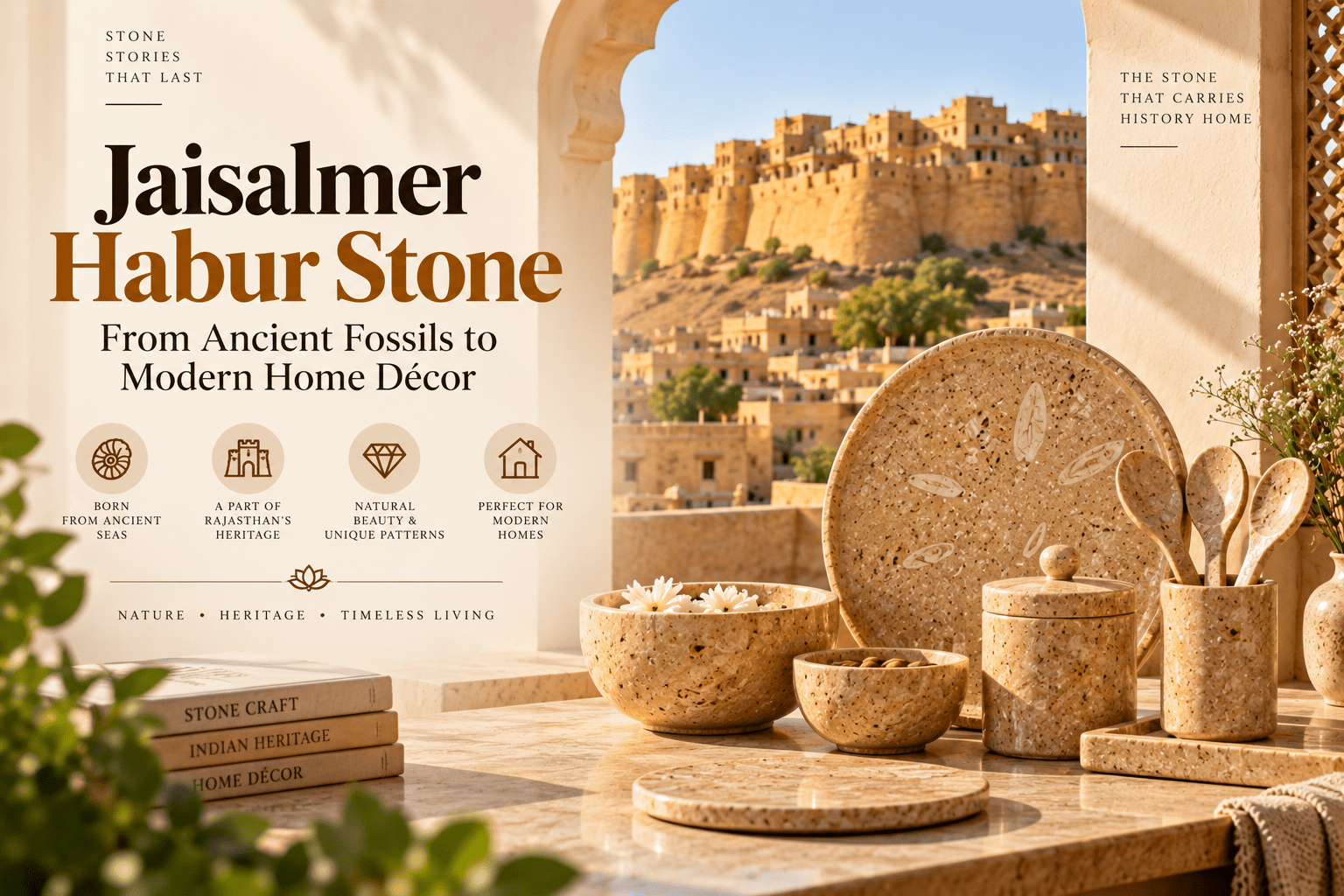
That is one of the fascinating qualities of Habur Stone from Jaisalmer, a natural stone associated with the Habur area of Rajasthan and commonly marketed as Jaisalmer Fossil Stone. Unlike manufactured decorative materials, natural stone carries its own patterns, colours and surface variations. With Habur Stone, those characteristics are especially interesting because the material is associated with fossil-rich geological formations. The stone has a distinctive earthy appearance, often showing reddish-brown tones with darker markings and natural variation. Once shaped by artisans, it can become a bowl, glass, bottle, decorative stone or other object for the home.
This creates an unusual journey:
Ancient natural formation → Rajasthan stone → artisan craftsmanship → modern home décor
That journey is what makes Habur Stone interesting beyond the finished product.
D’DASS currently offers several Habur Stone products, including a natural fossil stone piece, bowls, glasses, a bottle and a covered handi, showing how the same material can be interpreted into different forms.
What Is Habur Stone?
Habur Stone is a natural stone associated with the Habur area of Rajasthan near Jaisalmer.
It is commonly referred to as Jaisalmer Fossil Stone because of the fossil-related patterns and inclusions found within the material.
D’DASS describes its Habur Stone products as reddish-brown natural stone with darker patterns and fossil characteristics.
The important point is that the stone’s appearance is naturally created.
It is not a printed pattern designed to make an ordinary material look like a fossil.
The natural markings are part of the material itself.
Why Is It Called Jaisalmer Fossil Stone?
The connection with fossils is one of the main reasons Habur Stone attracts attention.
The Jaisalmer region is known for sedimentary rocks and geological formations that preserve evidence of ancient marine environments. Fossil-bearing rocks in the region have long been of interest because they preserve traces of life from geological periods when the area had very different environmental conditions.
This geological history is part of what gives Jaisalmer’s fossil-related stones their distinctive character.
Nature Creates the Pattern
The most interesting part is that the visual markings do not need to be perfectly uniform.
One piece may show darker spots.
Another may have lines or different tonal variations.
Another may reveal a different fossil pattern.
D’DASS notes that its natural Habur Stone products can vary in colour, pattern and appearance because the material is natural.
What Makes Habur Stone Look Different?
Habur Stone has an earthy visual character.
The D’DASS listings describe the material as brown or reddish-brown, with naturally occurring darker markings and variation.
This gives the stone a very different appearance from highly polished, uniform decorative materials.
Its beauty comes from variation.
You may notice:
- Brown and reddish tones
- Dark fossil-like markings
- Natural lines
- Uneven patterns
- Subtle tonal changes
- Individual surface character
These variations are part of what makes each finished object different.
Why Every Habur Stone Piece Can Look Different
Natural stone does not come from a factory mould.
Its geological formation determines its colour, density, pattern and inclusions.
When artisans turn the raw material into a finished object, they have to work with those natural characteristics.
This means two pieces made from the same type of stone may not look exactly alike.
D’DASS specifically states that its natural Habur Stone products can have variations in size, colour, veining, patterning, fissures, pits and other natural characteristics.
Natural Variation Is Part of the Material
This is an important distinction between natural stone and printed or synthetic decorative surfaces.
With a printed pattern, repetition can be controlled.
With natural stone, variation is part of the identity.
From Raw Stone to a Finished Object
A natural stone deposit is not immediately ready to become a bowl or decorative object.
It first has to be selected and shaped.
The general transformation involves several stages.
Selecting the Material
The stone is examined for suitable colour, structure and usable areas.
Cutting and Shaping
The material is shaped according to the intended object.
Smoothing the Surface
The surface needs to be refined while preserving the natural characteristics of the stone.
Forming the Final Object
Depending on the design, the stone may become a bowl, glass, bottle, handi or decorative piece.
Finishing
The final surface is prepared so that the natural material can be appreciated while remaining suitable for its intended use.
This transformation is where natural geology meets human craftsmanship.
Why Habur Stone Is Interesting as a Craft Material
The stone has an unusual combination of qualities.
It has:
Natural history
because its appearance comes from geological formation.
Visual individuality
because the patterns vary.
Craft potential
because the material can be shaped into useful and decorative objects.
Cultural connection
because it is associated with Rajasthan and the Jaisalmer region.
This makes it particularly suitable for people who appreciate objects with a story behind them.
The Connection Between Rajasthan and Natural Stone
Rajasthan is strongly associated with stone craftsmanship and architecture.
The region has a long tradition of working with locally available natural materials.
Jaisalmer itself is internationally recognized for its distinctive golden-yellow sandstone, prominently used in its historic architecture.
Habur Stone offers a different side of the same broader relationship between Rajasthan and natural stone.
Instead of being recognized only for monumental buildings, stone can also be transformed into smaller objects for everyday interiors.
That creates a connection between regional geology and contemporary craftsmanship.
Habur Stone Is More Than a Decorative Pattern
One of the easiest mistakes is to look at a fossil stone object and see only its surface markings.
But the markings are part of the material’s identity.
A fossil-related pattern is not simply decoration painted on top.
The natural variations are what make the stone interesting.
This changes the way the object can be appreciated.
Instead of asking only:
“Does this match my décor?”
you can also ask:
“What is this material, and what makes it naturally different?”
That shift from decoration to material awar