




Why Do We Light a Diya? Understanding the Tradition Behind the Flame
A small flame can completely transform the atmosphere of a room. In millions of Indian homes, the day may begin with the lighting of a diya before the home mandir. During evening puja, festivals and important ceremonies, another flame may be lit as part of the ritual.
But have you ever stopped to ask:
Why do we light a diya?
Is it simply a tradition passed down through generations? Or does the flame carry a deeper spiritual meaning?
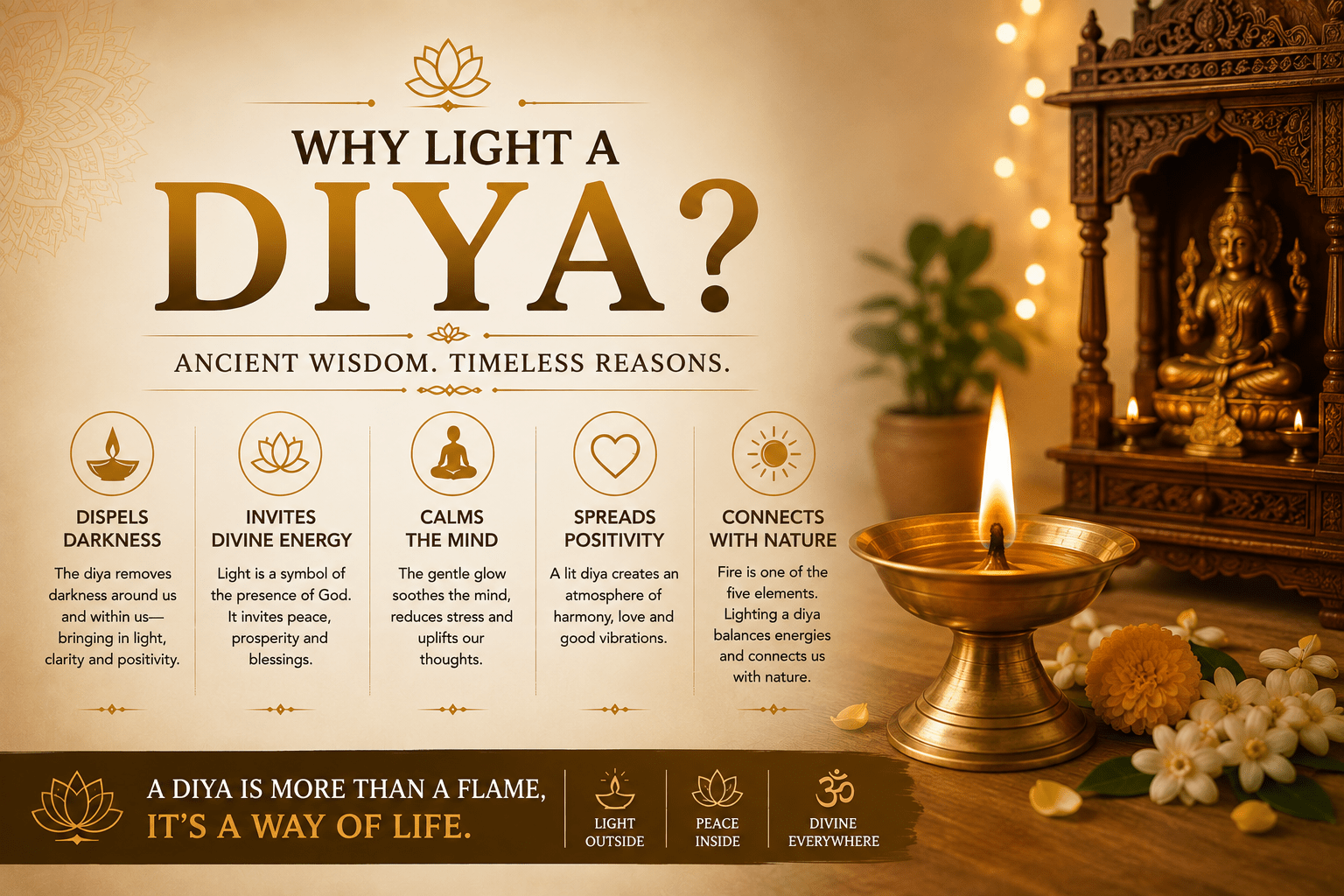
In Hindu traditions, the diya is much more than a source of light. It represents knowledge, purity, divine presence, hope and the removal of darkness. At the same time, it is useful to distinguish symbolic and religious beliefs from scientific claims. Lighting a diya can create a warm, peaceful environment, but claims that a diya automatically removes negative energy or cures physical conditions should not be treated as scientific facts.
Let’s explore the deeper meaning behind this simple and beautiful tradition.
-
What Is a Diya?
A diya, also called a deepa or deepam in different Indian languages and traditions, is a traditional oil or ghee lamp.
It is commonly made from:
- Clay
- Brass
- Copper
- Silver
- Stone
- Other traditional materials
A cotton wick is placed in oil or ghee and then lit. The design may be extremely simple or highly decorative. From a small clay diya used during Diwali to an elaborate brass lamp used in a temple, the form can vary considerably.
But the essential element remains the same:
A flame.
- The Most Important Symbol: Light Over Darkness
Perhaps the simplest explanation for the diya is also the most profound. The flame represents light. Darkness represents what we cannot see. Light allows us to see clearly. This physical experience becomes a spiritual metaphor.
In Hindu philosophical traditions, light is often associated with:
- Knowledge over ignorance
- Awareness over confusion
- Truth over illusion
- Hope over despair
Therefore, lighting a diya during puja can be understood as a symbolic act of inviting light into one’s life.
-
Why Is a Diya Lit Before Puja?
The diya is often lit at the beginning of a puja because it helps establish the atmosphere for worship.
The sequence may look simple:
Clean the space → Light the diya → Offer prayers → Chant → Perform aarti
The flame marks the transition from ordinary activity to a more focused spiritual moment.
It tells the mind:
- Pause.
- Be present.
- Begin the prayer.
This ritual significance is one reason the diya remains central to many Hindu households.
-
The Diya Represents Divine Light
In many Hindu traditions, light has a sacred association with the divine. The flame can symbolize the presence of God or divine consciousness. When the diya is placed before the deity, the physical flame becomes part of the act of offering. The devotee isn’t merely lighting an object.
The act can represent:
“May there be light within and around me.”
This interpretation varies among traditions, but the association between divine worship and light is widespread across Hindu practice.
-
The Flame and Knowledge
One of the most beautiful interpretations of the diya is its association with knowledge. A room can be filled with darkness, but one small flame changes what we can see. In the same way, knowledge can change how we understand the world.
This creates a powerful metaphor:
- Darkness
Ignorance, confusion and unawareness.
- Flame
Knowledge, clarity and understanding.
- Light
Awareness and wisdom.
Therefore, when a diya is lit, the ritual can be viewed as a reminder to seek knowledge rather than remain in ignorance.
-
Why Is Fire Important in Hindu Traditions?
Fire has a particularly important place in Indian religious traditions. Agni, the fire deity, appears prominently in Vedic traditions.
Fire has historically been associated with:
- Offerings
- Transformation
- Ritual
- Purification
- Communication with the divine
The diya is not the same as a Vedic sacrificial fire, but it belongs to the broader cultural and religious symbolism surrounding sacred fire and light. A flame transforms oil or ghee into light and heat. This physical transformation itself can become symbolic of spiritual transformation.
-
The Diya as a Symbol of Purity
The flame is also commonly associated with purity. When we light a diya in a clean puja space, it creates a sense of order and sacredness. The flame itself is visually simple. It doesn’t need decoration to command attention.
This simplicity can encourage a similar mental quality:
Less distraction.
More focus.
That is one reason the diya works so naturally within a home mandir.
-
Why Do We Light a Diya in the Morning?
Many Indian families traditionally light a diya during morning puja. Morning has its own symbolism. The Sun rises. The day begins.
The home becomes active. Lighting a diya can become the first deliberate spiritual action of the day. It creates a small moment before the day’s responsibilities begin.
The ritual can be especially meaningful when combined with:
- Prayer
- Meditation
- Sanskrit shlokas
- Gratitude
- Reading scripture
- Quiet reflection
The flame becomes a visual reminder to begin the day consciously.
-
Why Do We Light a Diya in the Evening?
Evening is another important time for lighting a diya. As daylight disappears, the flame becomes increasingly visible. Traditionally, lighting lamps at dusk has been associated with welcoming auspiciousness and maintaining a sacred atmosphere in the home. From a practical perspective, lamps were historically important sources of illumination before electric lighting. Over time, practical lighting and spiritual symbolism became deeply intertwined.
Today, the diya continues to represent that transition:
Day → Evening
Activity → Reflection
Light → Darkness
-
The Diya During Aarti
The diya becomes especially significant during aarti. During aarti, a lit lamp is traditionally moved before the deity in a ritual offering. The movement of the flame creates a beautiful visual experience. After the aarti, devotees may bring their hands toward the flame and then touch their face or head. This gesture is traditionally understood as receiving the blessings or sacred warmth of the flame. Practices differ between communities, but the central idea is one of reverence toward the divine.
-
Why Is Oil Used in a Diya?
Traditional diyas commonly use oil or ghee as fuel. Different traditions may prefer different oils.
Common examples include:
- Sesame oil
- Ghee
- Mustard oil
- Coconut oil
The choice varies by region, ritual and household tradition. The fuel allows the cotton wick to sustain the flame. There are also symbolic interpretations associated with the burning of the fuel. As the oil is gradually consumed, it can be viewed metaphorically as the transformation of material attachment into spiritual illumination. Again, this is a symbolic religious interpretation, not a scientific mechanism.
-
Why Is the Wick Important?
The cotton wick is another essential part of the diya. It draws the oil upward through capillary action, allowing the flame to continue burning. Traditionally, the wick can also carry symbolic meaning.
It connects:
Fuel → Flame → Light
- The oil provides the fuel.
- The wick carries it.
- The flame produces light.
This simple physical process can become a metaphor for spiritual life:
Resources + discipline + awareness = illumination
The exact symbolism varies across traditions, but the visual relationship is undeniably powerful.
-
The Five Elements and the Diya
Indian philosophical traditions often refer to the Pancha Mahabhuta, or five great elements:
- Earth
- Water
- Fire
- Air
- Space
A diya visibly represents fire.
But the complete act of lighting a diya can involve several elements:
- The lamp itself may represent earth or material form.
- The oil represents a liquid element.
- The flame represents fire.
- The surrounding air supports combustion.
- The space around the flame provides the setting.
- This makes the diya a small visual reminder of the relationship between humans, nature and the elements.
-
Does a Diya Remove Negative Energy?
This is a common question. Traditional beliefs may describe the diya as removing darkness or negative influences. However, we should distinguish religious symbolism from scientific evidence. A physical flame certainly produces light and warmth. It can change the visual atmosphere of a room. The belief that a diya literally removes supernatural negative energy is a matter of religious or cultural belief, not something established by modern science. The symbolic meaning remains powerful without needing a scientific claim.
-
Can Lighting a Diya Calm the Mind?
Many people find the gentle movement of a flame visually calming. Watching a steady flame can encourage a person to slow down and focus. This is one reason candle flames and oil lamps appear in contemplative practices across different cultures. However, the effect isn’t guaranteed for everyone. The diya’s strongest contribution may come from the ritual surrounding it.
- You stop.
- You light the flame.
- You sit quietly.
- You pray.
- You breathe.
- You focus.
That sequence itself can encourage a calmer state of mind.
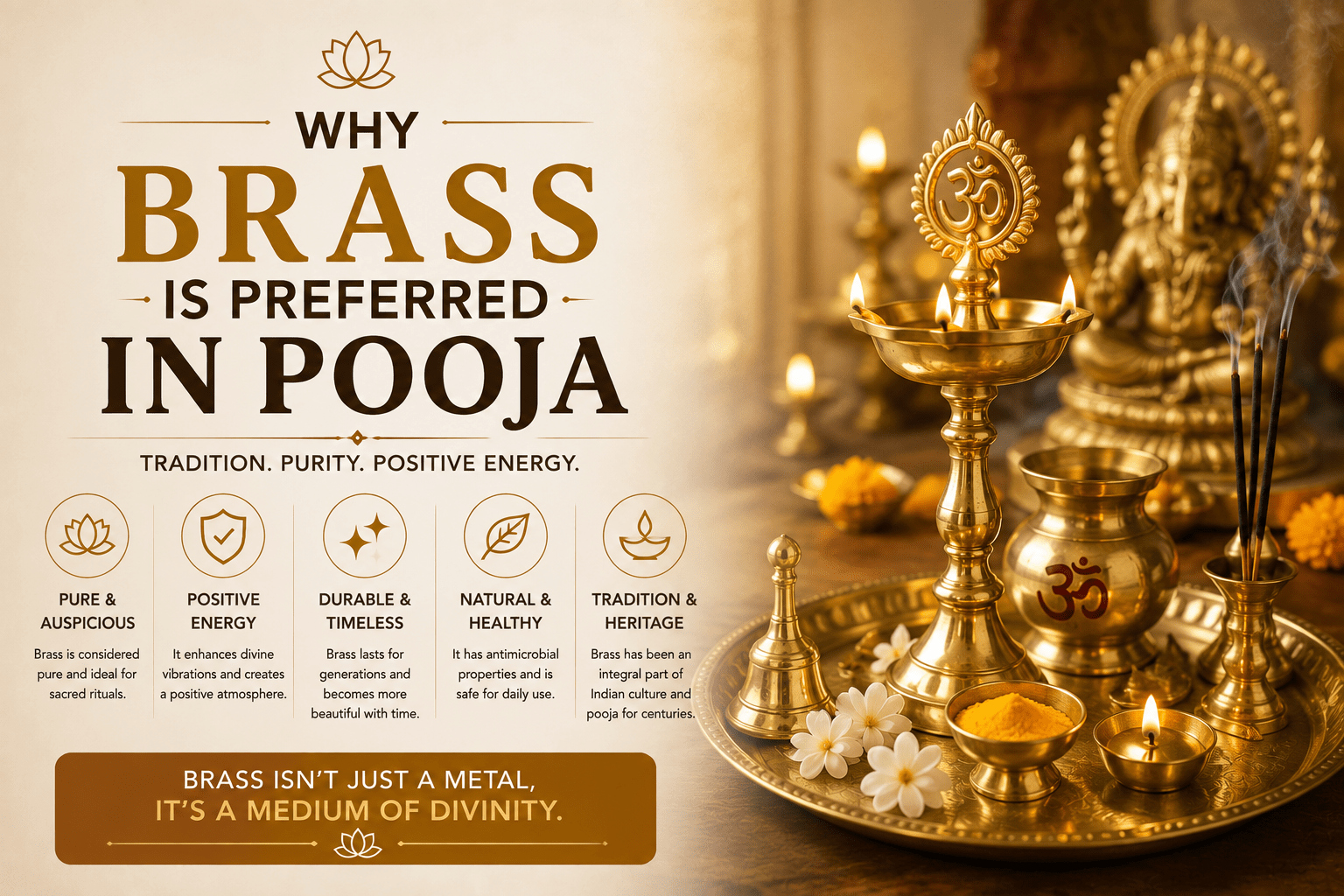
- Why Brass Diyas Are So Popular
Among traditional diya materials, brass has a particularly strong place in Indian households. A brass diya combines functionality with craftsmanship. Its golden surface reflects the flame beautifully. Over time, the metal can develop a natural patina.
Traditional brass diyas may feature:
- Lotus designs
- Peacock motifs
- Elephant details
- Floral patterns
- Multiple wicks
- Ornamental bases
This makes the diya both a ritual object and an example of Indian metal craftsmanship.
-
Diya and the Home Temple
The diya naturally belongs beside a home mandir. A beautifully designed wooden temple provides a dedicated space for worship. Adding a traditional brass diya introduces warmth and movement.
The combination of:
Wood + Brass + Flame
creates a distinctly Indian visual language. The carved wood represents craftsmanship. The brass represents traditional metalwork. The flame represents light. Together, they transform a prayer corner into a meaningful ritual space.
-
Why Diya Is Important During Festivals
During Indian festivals, the significance of lamps becomes even more visible. Diwali, in particular, is famously associated with the lighting of diyas. Homes, balconies, entrances and temples may be decorated with rows of lamps. The visual effect is spectacular.
But behind the decoration is an ancient symbolic idea:
Light triumphs over darkness.
The diya therefore becomes both a decorative object and a cultural symbol.
-
The Diya and Lakshmi Puja
During Diwali, diyas are commonly used during Lakshmi Puja. The lamp becomes part of the ritual environment dedicated to worship and auspiciousness. In many households, lighting diyas is also associated with welcoming prosperity and goodness. It is important, however, to understand such ideas as religious and cultural beliefs, rather than guarantees that lighting a lamp will produce financial prosperity.
The ritual expresses an intention:
May our home be filled with light, prosperity and auspiciousness.
-
The Diya Teaches an Important Lesson
A diya is remarkably small. Yet it can illuminate a surprisingly large space.
This creates a beautiful life lesson:
You don’t need to be enormous to make a difference. One small flame can push back darkness. One kind action can change someone’s day. One good thought can change a conversation. One person can inspire a family. This is one reason the diya continues to resonate across generations. Its physical simplicity carries a profound metaphor.
-
Lighting a Diya as a Daily Ritual
You don’t need a festival to light a diya. For families who follow the tradition, a simple daily practice can be enough.
You can:
- Clean the puja space.
- Place the diya safely.
- Add the appropriate oil or ghee.
- Prepare the cotton wick.
- Light the flame.
- Offer a short prayer.
- Sit quietly for a moment.
- Begin your day or evening.
The ritual doesn’t have to take a long time. Even a few minutes of intentional prayer can create a meaningful pause.
-
A Diya Is More Than Decoration
Modern homes often use decorative lamps, candles and electric lights. A diya is different. Its significance comes from the act of lighting it. You prepare it. You light it. You offer it. You observe it. You pray before it. That participation gives the object meaning. A diya sitting unused on a shelf is beautiful. A diya lit with intention becomes a ritual.
-
The Modern Meaning of an Ancient Flame
The world has changed dramatically. We have LED lights. Smart homes. Automated lighting. Digital prayer apps. Yet people still light a tiny oil lamp. Why?
Because the diya represents something technology cannot replace:
ritual. It gives us a reason to pause. It connects the present with generations before us. And it turns an ordinary moment into a sacred one.
-
How to Keep a Diya Safely
Because a diya uses an open flame, safety should always come first.
- Keep it on a stable surface
Place the diya where it cannot easily tip over.
- Keep it away from curtains and fabrics
Never place an open flame close to combustible materials.
- Don’t leave it unattended
Especially around children or pets.
- Use an appropriate lamp
Choose a diya designed for its intended fuel and use.
- Allow it to cool
Brass and other materials can become hot during use. Traditional practice should always be combined with sensible fire safety.
-
The Deeper Meaning of Lighting a Diya
At the heart of the tradition is a simple transformation.
You begin with:
- Oil + Wick + Darkness
You end with:
- Flame + Light + Awareness
That transformation is why the diya is so powerful as a symbol. It reminds us that darkness doesn’t always need to be fought. Sometimes, you simply need to light a lamp.
Conclusion: Why Do We Light a Diya?
So, why do we light a diya?
The answer has many layers.
🪔 To Represent Light
The flame symbolizes light overcoming darkness.
🧠 To Represent Knowledge
The diya can represent the movement from ignorance toward awareness.
🙏 For Devotion
Lighting a diya is an offering and an important part of many puja traditions.
🌅 To Begin With Intention
Morning diya lighting can mark the start of a new day.
🌙 To Create a Sacred Evening
An evening lamp can mark the transition from daylight to nighttime prayer.
🔥 To Honor the Symbolism of Fire
Fire has a central place in many Indian religious traditions.
❤️ To Preserve Tradition
A simple flame connects modern families with generations before them.
But perhaps the most beautiful meaning is the simplest:
A diya reminds us that even a small light can overcome a great darkness.
Every time you light one, you’re not just creating brightness.
You’re creating a moment.
A moment to pause.
A moment to pray.
A moment to be grateful.
A moment to remember what matters.
And perhaps that is why, after thousands of years, the humble diya still has a place in Indian homes.
Light outside.
Peace inside.
A little more awareness with every flame. 🪔