




Why Use Brass Utensils? The Traditional Indian Wisdom Behind Brass Cookware
Before stainless steel became a standard in Indian kitchens, many households relied on metals such as brass, copper and bronze for cooking, serving and storing food. Brass glasses, bowls, plates, lotas and containers were once familiar sights in traditional Indian homes. Today, stainless steel, aluminium, glass and non-stick cookware dominate modern kitchens. Yet brass utensils haven’t disappeared. They continue to be used for traditional meals, religious occasions, serving, festivals and as treasured family heirlooms.
So, why use brass utensils?
Is it simply because they look beautiful?
Do they actually offer practical advantages?
And what should you know before using brass with food?
The answer requires separating traditional wisdom from modern health claims. Brass has genuine qualities that explain its historical popularity, but not every claim circulating online about brass utensils is scientifically established.
Let’s look at the tradition more closely.
-
What Exactly Is Brass?
Brass is an alloy primarily composed of copper and zinc. The exact composition can vary depending on the type of brass and its intended application. Because it can be shaped, cast and finished beautifully, brass has been used for centuries to create household objects, decorative pieces, lamps, religious articles and utensils. Its characteristic golden-yellow appearance is one of its most recognizable features. In the Indian context, brass became particularly important in both the kitchen and the puja room.
-
Why Were Brass Utensils Traditionally Used?
There wasn’t necessarily one single reason.
The popularity of brass came from a combination of:
- Durability
- Workability
- Availability of metalworking traditions
- Attractive appearance
- Reusability
- Cultural familiarity
- Suitability for certain household objects
Traditional Indian metalworkers developed sophisticated techniques for making vessels and utensils. A well-made brass vessel could remain in a household for decades. This longevity made brass practical as well as culturally valuable.
-
Brass Was Part of the Traditional Indian Kitchen
A traditional kitchen could contain a variety of metal vessels, each with a specific purpose.
Brass might be used for:
- Drinking vessels
- Serving bowls
- Plates
- Storage containers
- Water vessels
- Cooking vessels designed for appropriate foods
- Ritual utensils
Different regions of India developed their own preferences and styles. Therefore, there isn’t one universal “traditional Indian kitchen.”
Food habits, materials and utensils varied considerably across geography and communities. Still, brass remained a recognizable part of Indian material culture.
-
The Beauty of Brass Is Part of Its Appeal
One of the most obvious advantages of brass is aesthetic. Its warm golden tone gives a table setting a distinctive traditional appearance. A brass thali filled with Indian food looks completely different from a modern stainless-steel plate. The metal reflects light beautifully. When polished, it has a bright golden finish. When aged, it develops a deeper patina. This changing appearance is one reason brass objects often feel timeless. They don’t simply look new or old. They develop character.
-
Brass Utensils Can Last for Generations
Durability is another important reason behind the continued use of brass. A high-quality brass vessel can last for many years when properly maintained. This is particularly valuable in a culture where household objects are often passed from one generation to another. A brass bowl may have been used by a grandmother. Her children may continue using it. Eventually, the same object may become part of the next generation’s kitchen or puja space. At that point, its value isn’t only material. It carries family history.
-
Brass and Indian Craftsmanship
Brass is closely connected with India’s long tradition of metal craftsmanship. Artisans have historically used casting, hammering, engraving and other techniques to create highly detailed objects. Some brass utensils are simple and functional.
Others feature Floral motifs:
- Geometric patterns
- Traditional engraving
- Decorative handles
- Hammered textures
- Regional designs
This makes a brass utensil more than a kitchen tool. It can also be an example of traditional Indian craftsmanship.
-
Does Brass Have Antimicrobial Properties?
This is where modern science enters the discussion. Copper and many copper-containing alloys, including some brasses, can exhibit antimicrobial activity under appropriate conditions. Research on copper alloys has demonstrated that certain surfaces can reduce the survival of microorganisms. However, this does not mean that every brass utensil automatically disinfects food or makes food safe.
Antimicrobial performance depends on factors such as:
- Alloy composition
- Surface condition
- Microorganism involved
- Contact time
- Temperature
- Environmental conditions
Therefore, it is more accurate to say that some brass alloys possess antimicrobial properties, rather than claiming that brass utensils “kill all germs.”
-
What About Digestion and Immunity Claims?
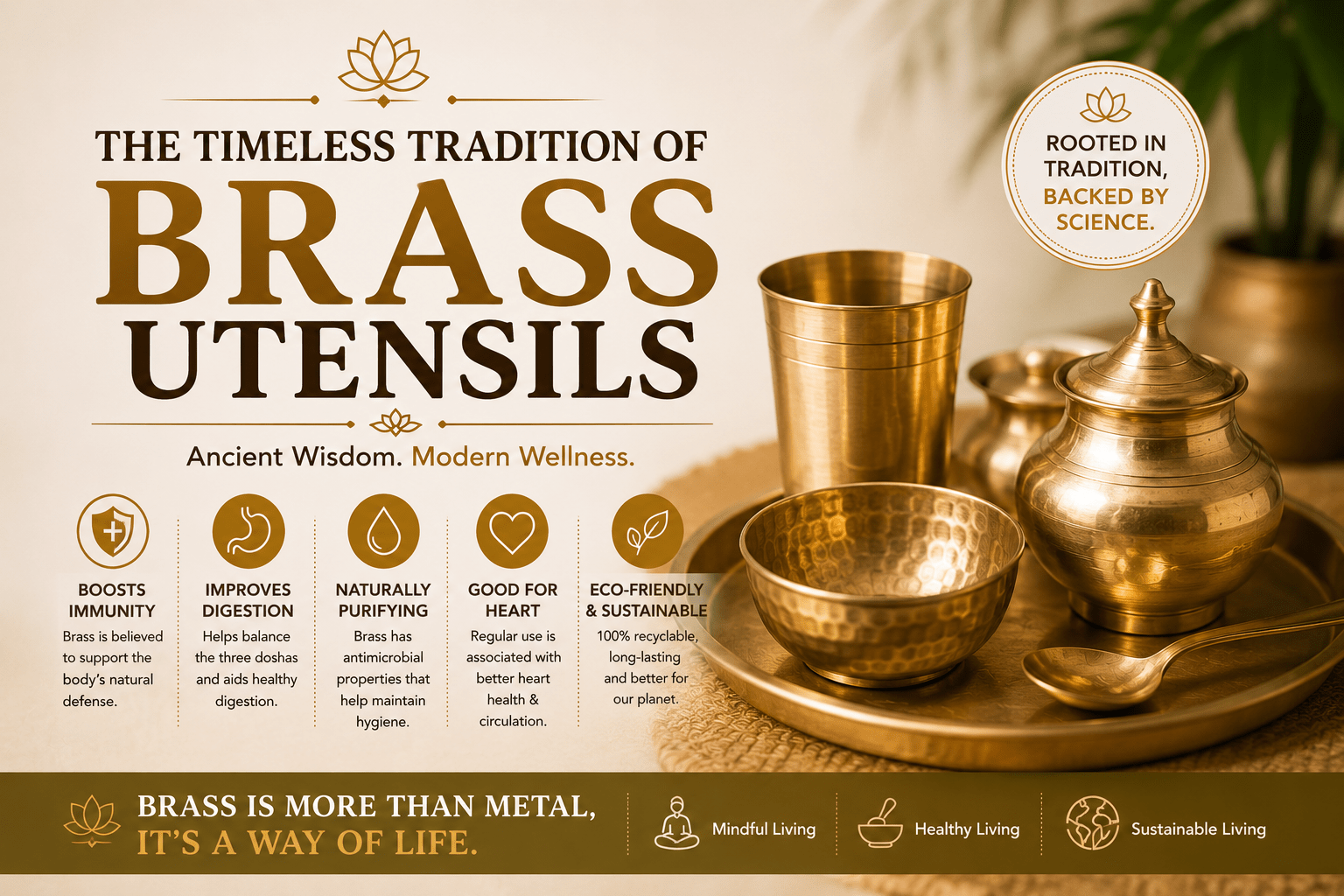
You may see claims online that brass utensils improve digestion, boost immunity or improve heart health. These claims should be treated cautiously. There is not sufficient evidence to conclude that simply eating from brass utensils provides these broad health benefits. Traditional Indian practices sometimes associate different metals with specific qualities, but traditional belief and scientific evidence are not the same thing. Using brass can certainly be part of a healthy lifestyle, but it should not be presented as a treatment or nutritional intervention. The strongest reasons to appreciate brass remain its heritage, durability, craftsmanship and appropriate culinary use.
-
Can You Cook Everything in Brass?
No, This is an important point. Brass is not universally suitable for every type of food preparation. Traditional brass utensils may have been designed for particular uses, and modern brass products can differ in composition and surface treatment. Acidic foods deserve particular caution because acids can react with certain metals and potentially increase metal migration into food.
Foods containing ingredients such as:
- Tamarind
- Tomato
- Lemon
- Vinegar
- Other acidic ingredients
should not automatically be cooked or stored in unlined brass vessels. If a brass vessel has a suitable food-safe lining, follow the manufacturer’s instructions regarding its intended use.
-
Brass vs Stainless Steel
Modern stainless steel became popular because it is relatively durable, easy to clean and versatile. So which is better?
It depends on the purpose.
| Feature | Brass | Stainless Steel |
| Traditional appeal | Excellent | Moderate |
| Durability | High | High |
| Maintenance | Requires more care | Generally easier |
| Appearance | Warm golden finish | Silver/metallic finish |
| Heritage value | Very high | Lower |
| Acidic food use | Requires caution | Generally more versatile |
| Craftsmanship | Excellent | Usually more functional |
| Family heirloom potential | High | Moderate |
Brass wins strongly on heritage and aesthetics.
Stainless steel generally wins on convenience and versatility.
There is no need to choose one material for every purpose.
-
Brass Utensils in Indian Festivals
Brass becomes especially visible during festivals and religious ceremonies. During Diwali, Navratri, weddings, housewarming ceremonies and other occasions, traditional brass objects may be brought out for use.
They can include:
- Thalis
- Diyas
- Kalash
- Bowls
- Serving vessels
- Bells
- Lamps
This illustrates something important about Indian material culture. Objects aren’t always separated into “religious” and “ordinary.” A beautifully crafted metal vessel can serve both practical and ceremonial roles.
-
Brass and the Pooja Room
The connection between brass and the home mandir is particularly strong.
A wooden home temple can be complemented with brass accessories such as:
Brass diya
Brass bell
Brass thali
Brass incense holder
Brass kalash
The combination of wood and brass creates a distinctly traditional Indian aesthetic. The wood contributes warmth and natural texture.
The brass adds a golden metallic element. The diya adds light. Together, they create a visual environment strongly associated with Indian worship.
-
Why Brass Feels More “Traditional”
There is a psychological dimension to traditional objects.
A polished brass vessel can immediately remind people of:
- Grandparents’ homes
- Traditional kitchens
- Festivals
- Temple rituals
- Family ceremonies
- Childhood memories
This emotional connection is one reason brass continues to appeal to younger generations. People aren’t necessarily buying it because they reject modern materials. They may simply want to bring a piece of heritage into a modern home.
-
Brass Is Reusable and Long-Lasting
There is also a sustainability argument for durable metalware. A high-quality brass utensil can potentially remain in use for decades. Instead of repeatedly replacing disposable serving products or inexpensive household objects, a durable metal object can stay in circulation for a very long time. Brass is also recyclable as a metal. However, sustainability depends on the entire lifecycle of a product, including sourcing, manufacturing, transportation and eventual recycling. So it is more accurate to call durable brassware potentially long-lasting and reusable, rather than automatically “zero-waste.”
-
How to Clean Brass Utensils
Brass requires more maintenance than stainless steel. Over time, exposure to air and moisture can cause the surface to tarnish. Regular care can help maintain its appearance. Basic practices include:
Clean after use
Don’t leave food residue sitting on brass unnecessarily.
Dry thoroughly
Moisture can contribute to surface changes.
Polish periodically
Use a brass-safe cleaning method appropriate to the item’s finish.
Avoid harsh abrasives
Aggressive scrubbing can damage decorative surfaces.
Follow manufacturer instructions
Especially if the utensil is lined or coated. The goal isn’t necessarily to keep every brass object perfectly mirror-like. A natural patina can also be part of its character.
-
How to Use Brass Safely
If you’re introducing brass utensils into your kitchen, keep a few principles in mind.
- Buy food-safe products.
Not every brass decorative object is intended for food contact. - Check the composition and lining.
Manufacturers should specify the intended use where relevant. - Be cautious with acidic foods.
Avoid prolonged contact unless the vessel is specifically designed for that purpose. - Keep utensils clean.
Traditional does not mean maintenance-free. - Don’t assume health claims are proven.
Brass is not a substitute for a balanced diet or medical care. - Follow product-specific instructions.
Modern brassware may differ significantly from traditional unlined vessels. - Brass as a Family Heirloom
Perhaps the most compelling reason to use brass isn’t scientific at all. It is emotional. A stainless-steel bowl may serve its purpose perfectly. But a brass bowl can become part of a family’s story. Imagine a traditional brass thali used during a wedding. Years later, it appears during a festival. Then it is used by the next generation.
Eventually, someone remembers:
“This belonged to our grandmother.”
That is the kind of value that doesn’t appear on a product specification sheet.
-
Should Modern Homes Bring Back Brass?
Absolutely — but selectively. You don’t need to replace your entire kitchen. Instead, introduce brass where it adds genuine value.
Consider:
- A brass serving bowl
- A traditional thali
- A water vessel designed for appropriate use
- A brass diya
- A brass puja set
- Decorative serving pieces
This allows you to combine modern convenience with traditional craftsmanship. The goal isn’t to recreate an old kitchen exactly. It’s to preserve the elements of traditional living that still make sense today.
The Real Reason to Use Brass Utensils
So, why use brass utensils?
The answer isn’t simply “because our ancestors used them.” And it isn’t accurate to claim that brass automatically provides miraculous health benefits. The real story is more interesting.
Brass combines:
🪔 Tradition
A material deeply connected with Indian household and religious culture.
🔨 Craftsmanship
A metal that has been shaped into beautiful objects by generations of artisans.
✨ Aesthetics
A naturally warm, golden appearance that brings character to a table or home.
💪 Longevity
Quality brassware can remain useful for many years with proper care.
❤️ Heritage
Traditional brass objects can become family heirlooms.
♻️ Reusability
Durable metalware can stay in use for a long time and can be recycled at the end of its life. The next time you see a brass utensil in an Indian home, look beyond its golden surface.
It represents a different approach to everyday objects:
Buy less.
Choose well.
Maintain it.
Use it for years.
Pass it on.
Brass isn’t just a utensil.
It can be a piece of Indian craftsmanship sitting at your dining table. 🪔✨
Frequently Asked Questions
Is it healthy to eat in brass utensils?
Brass has a long history of use in Indian households, but broad claims that brass utensils directly improve immunity, digestion or heart health aren’t sufficiently established. Food-safe brass should be used according to its intended purpose.
Can brass utensils be used for cooking?
Some brass cookware is designed for cooking, but not all brass utensils are suitable for it. Check the manufacturer’s instructions and avoid inappropriate use, especially with acidic foods.
Can we store food in brass utensils?
It depends on the vessel, its composition and its lining. Acidic foods should not be stored for prolonged periods in unlined brass unless the product is specifically designed for that purpose.
Why are brass utensils popular in India?
Brass has a long history in Indian craftsmanship and household traditions. Its durability, distinctive golden appearance and cultural significance have helped maintain its popularity.
Are brass utensils better than stainless steel?
Neither is universally better. Brass offers traditional aesthetics and heritage value, while stainless steel is generally easier to maintain and more versatile for everyday cooking and storage.
How do you clean brass utensils?
Brass utensils should be cleaned according to their finish and manufacturer’s recommendations. Regular cleaning, thorough drying and occasional brass-safe polishing can help maintain their appearance.