





Why Is Brass Preferred in Puja?
Walk into a traditional Indian home during morning prayer and you’ll often notice something familiar: the warm golden glow of brass. A brass diya burns beside the deity. A brass bell hangs near the mandir. A brass puja thali holds flowers, kumkum and rice. A brass kalash sits at the center of the ritual arrangement.
But why brass?
With stainless steel, silver, copper, ceramic and countless modern materials available today, why is brass preferred in puja?
The answer isn’t based on one single rule. Brass became deeply associated with Hindu worship through a combination of tradition, craftsmanship, ritual practice, durability, appearance and cultural symbolism. Over generations, brass has become one of the most recognizable materials associated with Indian temples and home puja spaces.
Let’s explore the story behind this timeless metal.
-
What Is Brass?
Brass is an alloy primarily made from copper and zinc. Its distinctive golden-yellow appearance gives it a visual character that sits beautifully within traditional Indian worship spaces. Brass is also relatively durable and can be shaped into detailed objects.
These qualities made it particularly useful for producing ritual items such as:
- Diyas
- Bells
- Puja thalis
- Kalash
- Incense holders
- Lamps
- Panchapatra
- Small deity accessories
- Temple decorations
Over time, these practical qualities became intertwined with religious and cultural traditions.
-
Why Is Brass Used in Puja?
The simplest answer to why brass is used in puja is tradition combined with practicality. Brass is durable, attractive and suitable for producing a wide range of ritual objects. Its warm golden appearance also complements the visual atmosphere of worship.
Think about a traditional puja arrangement:
Brass diya + fresh flowers + kumkum + sandalwood + sacred water
The combination creates a distinctly Indian visual language. But brass isn’t considered sacred merely because it is gold-coloured. Its importance comes from centuries of cultural and ritual use.
-
Brass Has a Long History in Indian Craftsmanship
India has a rich tradition of metalworking. Artisans across different regions developed specialized techniques for casting, shaping, engraving and polishing metal objects. Brass became an important material for household and religious objects. Traditional artisans could create incredibly detailed designs using techniques passed down through generations. This is particularly visible in traditional brass pooja items. A simple diya can become an elaborate work of craftsmanship. A bell can feature intricate motifs. A puja thali can contain engraved floral patterns.
The object therefore serves two purposes:
1- It performs a ritual function
2- represents craftsmanship.
-
The Golden Appearance of Brass
One reason brass looks so appropriate in a puja space is its warm, golden appearance.
Gold has historically been associated with:
- prosperity
- auspiciousness
- purity
- divinity
- abundance
Brass isn’t gold, of course. But its golden tone creates a similar visual warmth at a much more accessible cost. When a brass diya reflects the flame of an oil lamp, the metal appears to glow. This creates a powerful visual connection between fire, light and the sacred environment.
-
Brass Diyas Are Especially Popular
Among all brass worship objects, the brass diya is perhaps one of the most recognizable. Lighting a diya is an important practice in many Hindu households and temples.
The flame is traditionally associated with:
- light
- knowledge
- auspiciousness
- removal of darkness
- divine presence
A brass diya provides a durable vessel for the flame. Its material also responds beautifully to repeated use. With regular cleaning and polishing, a traditional brass lamp can remain part of a family for years.
-
Why Brass Bells Are Common in Temples
Another familiar brass object is the temple bell. Brass is particularly suitable for casting bells and producing durable objects with resonant acoustic properties. The ringing of a temple bell has ritual and cultural significance. Devotees traditionally ring the bell upon entering or during worship. The sound marks the beginning of a devotional moment and becomes part of the sensory experience of the temple.
This creates an interesting combination:
Brass provides the object.
Sound provides the experience.
Ritual provides the meaning.
-
Brass and the Five Elements
You may encounter explanations online connecting brass directly with the Pancha Mahabhuta, or five great elements. Such interpretations vary across traditions and should not be treated as a universal scriptural rule explaining every brass object. However, Hindu ritual traditions frequently incorporate natural materials and symbolic associations with the elements.
Puja itself engages multiple sensory experiences:
- Fire from the diya
- Water from ritual vessels
- Fragrance from incense and sandalwood
- Flowers and natural offerings
- Sound from bells and mantras
Brass objects become part of this broader ritual environment.
-
Is Brass Considered Pure?
In many Indian traditions, brass is regarded as an appropriate and auspicious material for ritual objects. But the idea of ritual purity is more nuanced than simply saying “brass is pure.”Different Hindu traditions have different rules concerning materials, preparation, cleaning and ritual use. Brass is widely accepted for many puja objects because of its longstanding traditional use. Regular cleaning is also important. A brass diya covered in dirt or residue doesn’t have the same appearance as a well-maintained one. This is why traditional households often take care of their brass objects as part of preparing the puja space.
-
Brass Is Durable
There is also a very practical reason for its popularity. Brass is a durable material. A well-made brass puja item can last for many years with proper care. This makes brass especially suitable for objects that are used repeatedly.
A family might purchase a brass diya today and continue using it for:
Daily puja → Festivals → Weddings → Housewarming ceremonies → Special occasions
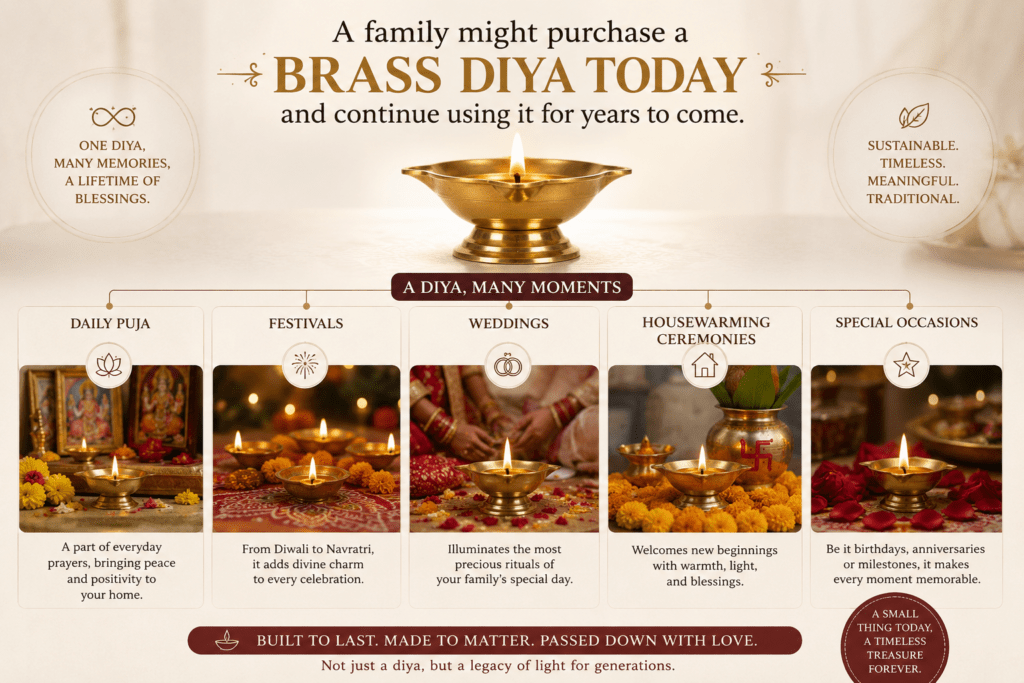
Some traditional brass objects even become family heirlooms. Their value then goes beyond the metal itself. They carry memories.
-
Brass Objects Can Become Family Heirlooms
This is perhaps one of the most beautiful aspects of traditional brass pooja items. A brass diya doesn’t necessarily remain just a household object. Imagine a grandmother lighting the same diya every morning. Years later, her children continue using it. Eventually, the next generation inherits it. The physical object remains while the people and circumstances around it change. This creates a connection between generations.
The brass object becomes a carrier of family tradition.
-
Brass Is Easy to Shape Into Detailed Designs
Brass is also valued by artisans because it can be worked into a variety of forms.
Traditional Indian metalworkers have created:
- Standing lamps
- Hanging lamps
- Bells
- Deity figures
- Pooja thalis
- Kalash
- Incense holders
- Decorative temple accessories
Some pieces feature intricate floral patterns, mythological motifs or traditional geometric designs. This makes brass particularly suitable for the Indian aesthetic of detailed craftsmanship.
-
Why Not Use Only Silver or Gold?
Silver and gold have important places in Indian religious traditions, but they aren’t practical for every household.
Brass offers a combination of:
Traditional appearance + durability + craftsmanship + affordability
This makes it accessible to a much wider range of families. A household doesn’t need an expensive precious-metal worship set to create a traditional puja environment. A simple brass diya and bell can provide a strong connection to traditional Indian worship.
-
Brass and the Warmth of a Home Mandir
Modern homes are changing. Apartments are becoming smaller. Dedicated pooja rooms aren’t always possible.
Yet many families still want a sacred corner. A wooden home mandir combined with brass accessories can create a balance between traditional and contemporary design.
For example:
Wooden mandir + brass diya + brass bell + brass thali + flowers
The wood provides warmth. The brass provides a traditional metallic glow. The diya provides light. Together, they create a visually distinctive worship space.
-
Is Brass Antimicrobial?
Brass contains copper, and copper-based alloys can exhibit antimicrobial properties under certain conditions. However, this should not be exaggerated into a claim that brass puja utensils automatically sterilize everything placed inside them.
The antimicrobial behavior of copper alloys depends on factors such as alloy composition, surface condition, contact time and environmental conditions. For puja objects, the strongest reason to choose brass remains its traditional use, durability, craftsmanship and suitability for ritual objects.
-
Brass Needs Proper Care
One reason some people avoid brass is that it develops a darker or duller surface over time. This is normal. Brass reacts with its environment and can develop tarnish. Fortunately, it can usually be cleaned and polished to restore much of its shine.
For regularly used puja items:
- Wipe them after use.
- Keep them dry when appropriate.
- Clean them periodically.
- Follow suitable care instructions for the specific finish.
- Avoid harsh cleaning methods that could damage decorative surfaces.
The changing appearance of brass can even become part of its character. An old brass diya can show traces of years of use.
-
Brass in Temples and Homes
The use of brass isn’t restricted to large temples. It has become deeply embedded in the Indian household.
You can find brass objects in:
Home mandirs
Temple complexes
Festival rituals
Wedding ceremonies
Housewarming ceremonies
Daily puja
Religious celebrations
This widespread use has helped brass become almost synonymous with traditional Indian worship.
-
The Deeper Meaning of Offering
Ultimately, the material itself isn’t the entire point.Puja is fundamentally about devotion, gratitude, reverence and connection.A brass diya is valuable because of what it represents within the ritual. hen someone lights a diya, they aren’t simply lighting a metal lamp. They are participating in a tradition passed through generations. When a bell rings, it isn’t merely producing sound. It becomes part of a sacred environment. When a brass thali holds flowers and offerings, the object becomes part of an act of devotion. This is what transforms an everyday material into a meaningful ritual object.
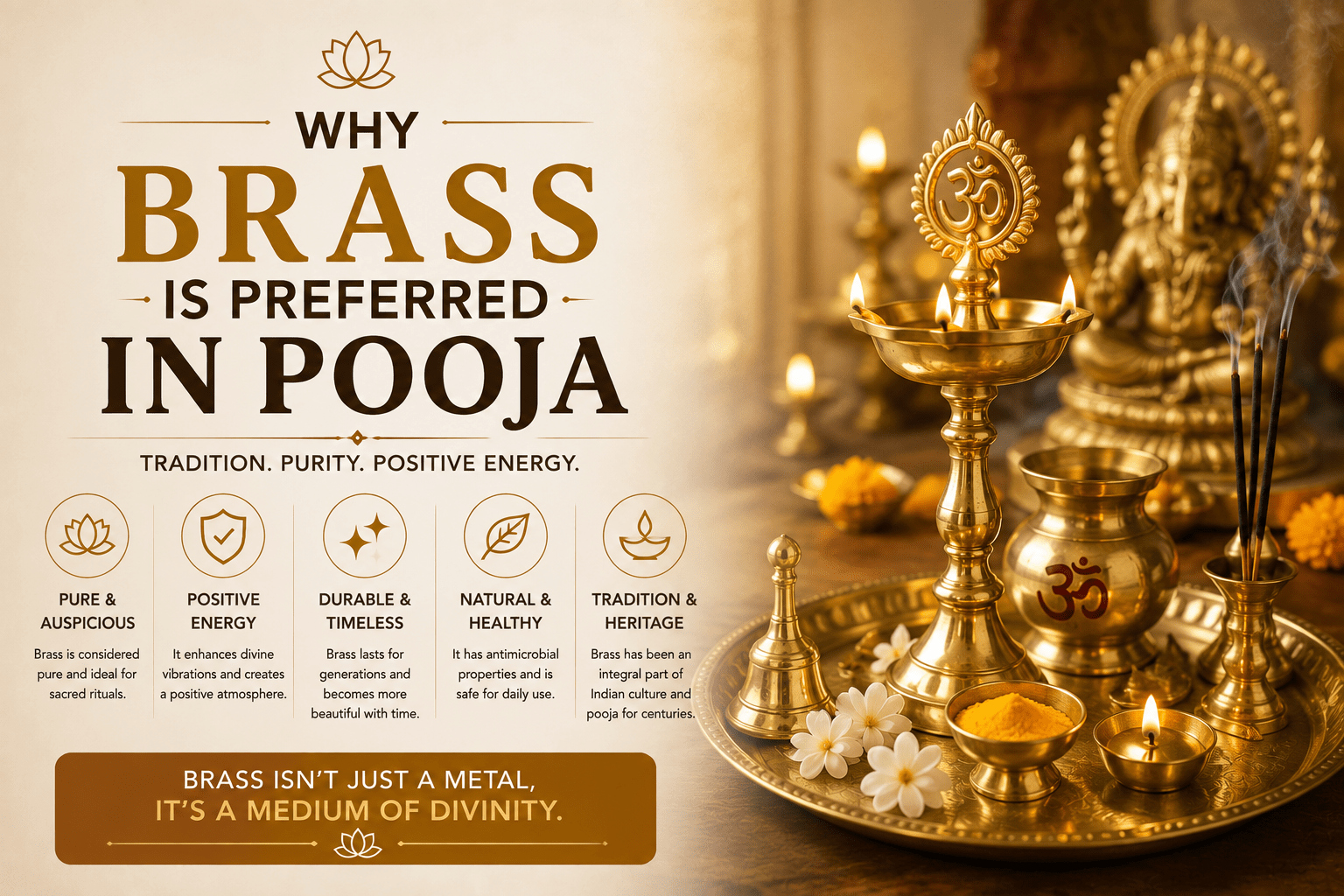
Brass Isn’t Just Metal
So, why is brass preferred in puja? There isn’t one universal answer. Its popularity comes from several factors:
🪔 Tradition
Brass has been part of Indian religious and household traditions for generations.
✨ Appearance
Its warm golden tone creates a beautiful visual presence in a puja space.
🛕 Ritual use
Brass is commonly used for diyas, bells, thalis, kalash and other worship objects.
🔨 Craftsmanship
Artisans can create highly detailed and beautiful brass objects.
💪 Durability
Well-made brass items can serve families for many years.
❤️ Heritage
Brass objects can become family heirlooms carrying memories from one generation to another. The next time you see a brass diya glowing inside a home mandir, look beyond the metal. It represents something larger. It represents craftsmanship, continuity and devotion. Because in Indian homes, some objects aren’t simply used.
They become part of the family’s story. 🪔🙏