


Why Do Indians Traditionally Sit on the Floor?
Before dining tables became common in Indian homes, sitting on the floor was simply a normal part of everyday life. Families sat together on the floor to eat. Children studied on the floor. Guests were welcomed on floor mats. People sat cross-legged during conversations. Prayer and meditation were often performed on the floor. Even today, you can see this tradition during festivals, family ceremonies, religious gatherings and traditional meals.
Why did sitting on the floor become such an important part of Indian life?
It wasn’t necessarily because people believed chairs were bad. Rather, floor sitting developed through a combination of culture, lifestyle, architecture, social customs, practicality and traditional ideas about posture and movement. And there is an interesting modern lesson hidden in this old habit.
Let’s explore it.
-
Sitting on the Floor Was Part of Everyday Life
Traditional Indian homes were designed differently from many modern homes. Furniture was often limited compared with today’s homes.
People commonly used:
- floor mats
- rugs
- carpets
- low wooden platforms
- cushions
- charpoys
- low seating
As a result, the floor became an important living surface.
People didn’t necessarily think:
“Today I am going to practice floor sitting.”
It was simply how daily life worked. You sat down wherever there was space. You ate there. You talked there. You worked there. You prayed there. The practice was therefore deeply integrated into the traditional Indian lifestyle.
-
Why Sit on the Floor While Eating?
One of the most recognizable examples is the traditional Indian meal. A meal may be served while everyone sits cross-legged on a mat or clean floor.
This arrangement is particularly common during:
- festivals
- religious ceremonies
- weddings
- community meals
- traditional family gatherings
It creates a shared environment where everyone sits at approximately the same level. Rather than each person being separated by a dining chair, the group gathers around the food. This can make the meal feel more communal.
-
Floor Sitting Encourages Natural Movement
Sitting on the floor requires the body to manage positions that aren’t always required when sitting on a chair. Depending on the position, the hips, knees and ankles may move through greater ranges of motion.
Common positions include:
- cross-legged sitting
- kneeling
- side sitting
- squatting
- Vajrasana
- Sukhasana
This variety means that traditional floor-based living can involve frequent transitions:
standing → sitting → standing
rather than remaining in a chair for long periods. However, the benefits depend heavily on the individual, the position and how long they remain in it.
-
Floor Sitting Can Encourage Flexibility
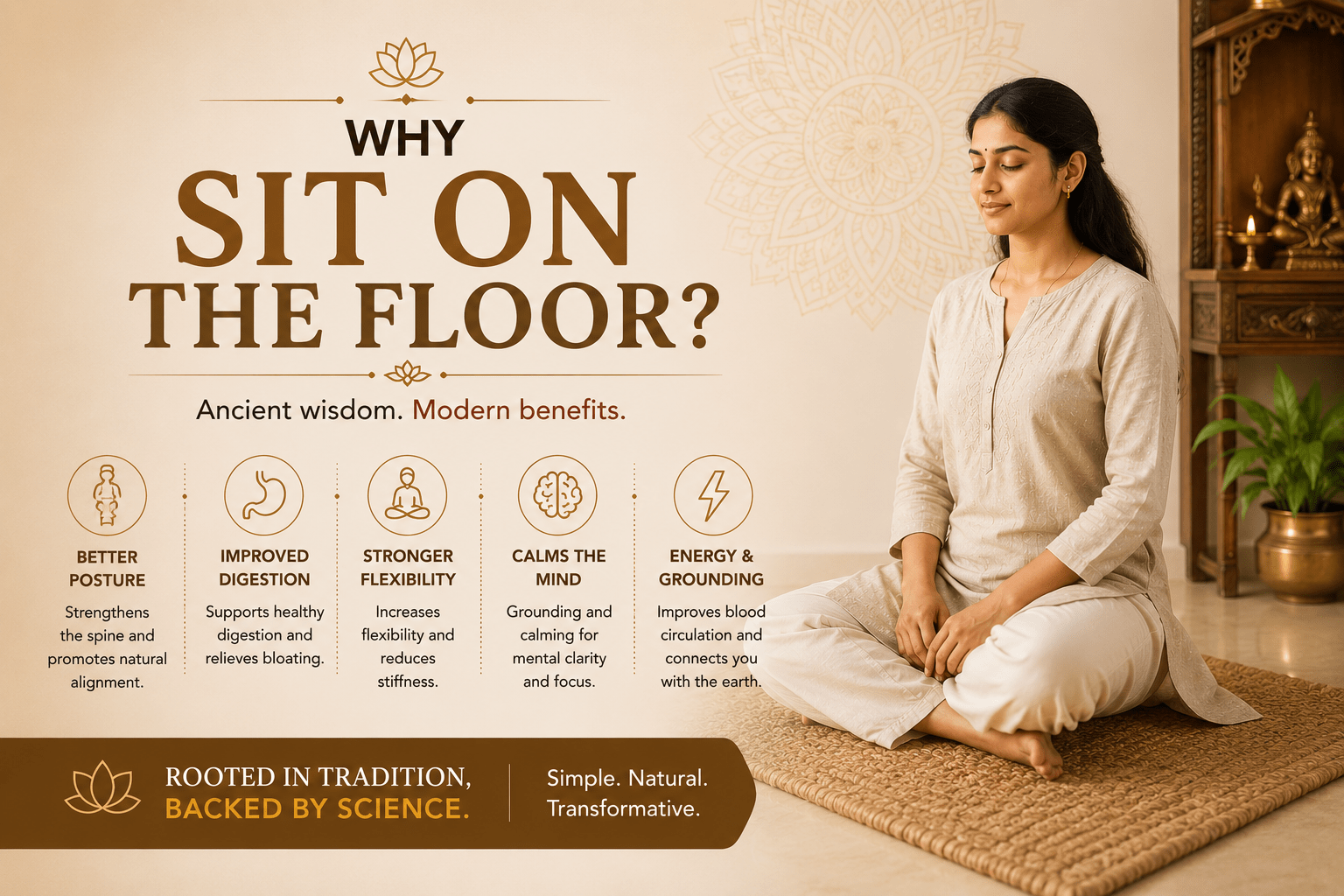
Regularly getting into and out of different floor positions may help maintain mobility in the hips, knees and ankles for people who are comfortable doing so. For someone accustomed to chair-only living, sitting on the floor can initially feel difficult. The hips may feel tight. The ankles may feel stiff. The knees may not comfortably bend. This isn’t necessarily because floor sitting is inherently superior. It may simply indicate that the body isn’t accustomed to those positions. Traditional lifestyles often involved more varied movement throughout the day.
-
Sitting on the Floor Requires Active Postural Control
A chair provides substantial support. The back is supported. The hips are positioned. The legs remain relatively fixed.
Floor sitting is different. Depending on the position, you may need to actively control your trunk and pelvis to remain upright. This can encourage awareness of posture. But again, this doesn’t mean that sitting on the floor automatically produces “perfect posture.” Poor posture is possible in any sitting position. The key is comfortable alignment and changing positions regularly.
-
Why Floor Sitting Is Connected With Yoga
Indian traditions of yoga and meditation contain numerous seated positions. Some familiar examples include: Sukhasana — an easy cross-legged sitting posture. Padmasana — the lotus posture. Vajrasana — a kneeling posture traditionally used in yoga and meditation. These positions demonstrate the long cultural relationship between floor sitting, contemplation and spiritual practice. However, everyday floor sitting shouldn’t automatically be equated with yoga. A person eating a meal cross-legged isn’t necessarily performing a yoga posture. The connection is cultural and historical rather than identical.
-
Floor Sitting Can Encourage Mindfulness
There is another interesting effect. When you sit on the floor, you become more aware of your body.
You notice:
- how your legs are positioned
- where your weight is distributed
- whether your back is upright
- how your feet touch the ground
- whether your hips feel comfortable
This increased bodily awareness can make the experience feel more intentional. That may partly explain why floor-based sitting has remained closely associated with meditation and prayer. The position itself doesn’t create mindfulness.
The way you use it does.
-
Why Is Floor Sitting Common in Prayer?
Traditional Hindu worship frequently takes place close to the ground.
A devotee may sit cross-legged while:
- chanting mantras
- performing puja
- reading scriptures
- meditating
- listening to spiritual teachings
There is a practical reason: many rituals are performed around a low altar or shrine. There is also a cultural symbolism of humility. Sitting on the floor places the individual physically lower than the deity or sacred object. This can reinforce the attitude of reverence and humility.
-
The Floor Creates a Sense of Grounding
The word “grounding” is often used in modern wellness discussions. We should distinguish the metaphorical meaning from unsupported claims about absorbing special energy from the Earth. Physically, sitting on the floor simply creates more direct awareness of the surface beneath you.
You can feel:
the mat → the floor → your body
This physical contact can make you more conscious of your position and surroundings. In traditional settings, this was often interpreted through cultural and spiritual frameworks. Today, it can also be understood simply as body awareness.
-
Sitting on the Floor Was Practical
There is also a straightforward explanation. Floor seating is economical. You don’t need a large dining table and a separate chair for every person.
A family can use:
- a mat
- a rug
- a low platform
- cushions
Then clear the space after the meal. This made floor-based living particularly practical for households where space and furniture were limited. Traditional Indian homes could therefore remain flexible. One room could serve multiple purposes throughout the day.
-
It Encouraged Flexible Living Spaces
Modern rooms are often designed around furniture. The sofa stays in one place. The dining table occupies another area. Chairs remain positioned around it. Traditional floor-based rooms could be more flexible.
A room could transform from:
Dining area → Conversation area → Prayer area → Sleeping area
simply by changing the mats and objects being used. This was particularly useful in compact homes.
-
Why Did Grandparents Often Sit on the Floor?
Older generations who grew up with floor-based lifestyles often developed greater familiarity with getting down to and rising from the floor. They may have done it hundreds of times over decades. This is an important point. The ability to sit comfortably on the floor isn’t just about age. It’s also about habit and exposure. Someone who has sat on the floor regularly since childhood may find it completely natural. Someone who has spent decades primarily in chairs may find the same position difficult. Movement is partly a skill.
-
Sitting on the Floor Is Not Automatically Better
This distinction is important. You may see claims online saying that floor sitting is always healthier than sitting on a chair. That’s too simplistic. Different bodies have different needs. Floor sitting can be uncomfortable or unsuitable for people with certain mobility limitations, joint problems or injuries. Even a healthy person can experience discomfort if they remain in one position for too long.
The most useful principle is:
Don’t stay in one position all day. Move regularly.
Floor sitting can be one option within a varied movement lifestyle. It doesn’t need to replace chairs completely.
-
Why Changing Positions Matters
One of the potential advantages of traditional floor-based living wasn’t necessarily one magical sitting position. It was variety.
Imagine a traditional day:
- Morning prayer — sitting on the floor.
- Breakfast — floor sitting.
- Walking outside — standing and walking.
- Household work — bending, squatting and reaching.
- Afternoon conversation — sitting in another position.
- Evening — walking again.
- The body experiences multiple positions.
Modern life can be different:
Chair → Car → Office chair → Sofa → Bed
The problem isn’t necessarily the chair. It’s prolonged inactivity.
-
Floor Sitting and Mobility
Getting down to the floor and getting back up requires coordination, strength, balance and mobility. For people who can do it comfortably, practicing these transitions can be one way to maintain functional movement. But it should be approached progressively. If someone isn’t accustomed to floor sitting, suddenly forcing a deep cross-legged or kneeling position isn’t necessary. Start comfortably. Use a cushion or mat. Change positions. Stand up periodically. And stop if something causes pain.
-
Why Indian Homes Used Mats
Traditional floor sitting was often done on mats rather than directly on bare ground.
Mats provided:
- insulation
- comfort
- a defined clean area
- protection from the floor
- a designated sitting space
Natural materials such as cotton, wool, reed and woven plant fibers were traditionally used in different regions. This also demonstrates how furniture isn’t always necessary to create comfortable living spaces. Sometimes the floor itself becomes the foundation of the room.
-
The Cultural Meaning of Sitting Together
Perhaps the most important benefit isn’t physical at all. It’s social. When a family sits together on the floor, everyone gathers around the same space. During a traditional meal, people may share food and conversation. During ceremonies, families sit together. During festivals, children and adults occupy the same floor space. The arrangement naturally encourages proximity. It creates a feeling of togetherness. That social dimension may be one of the reasons floor-based traditions remain meaningful even in homes filled with modern furniture.
-
From Tradition to Modern Homes
Today, most Indian homes use chairs, sofas and dining tables. There is nothing inherently wrong with that. Modern furniture provides comfort, accessibility and convenience. But floor sitting doesn’t have to disappear. A home can include both.
For example:
Dining table + traditional floor seating
Sofa + floor cushions
Chair + yoga mat
Modern furniture + traditional pooja space
This combination can preserve useful aspects of traditional living without rejecting modern comfort.
-
Why This Tradition Is Still Relevant
The deeper lesson isn’t:
“Throw away your chairs.”
It is:
Move more. Sit differently. Stay connected to your body.
Modern lifestyles often reduce movement variety. Floor sitting provides one simple opportunity to introduce another position into your day.
You might sit on the floor while:
- reading
- having tea
- playing with children
- doing meditation
- talking with family
- eating occasionally
- spending time in your pooja space
If comfortable and appropriate for you, these small changes can add variety to daily movement.
-
The Traditional Indian Idea of Living Close to the Ground
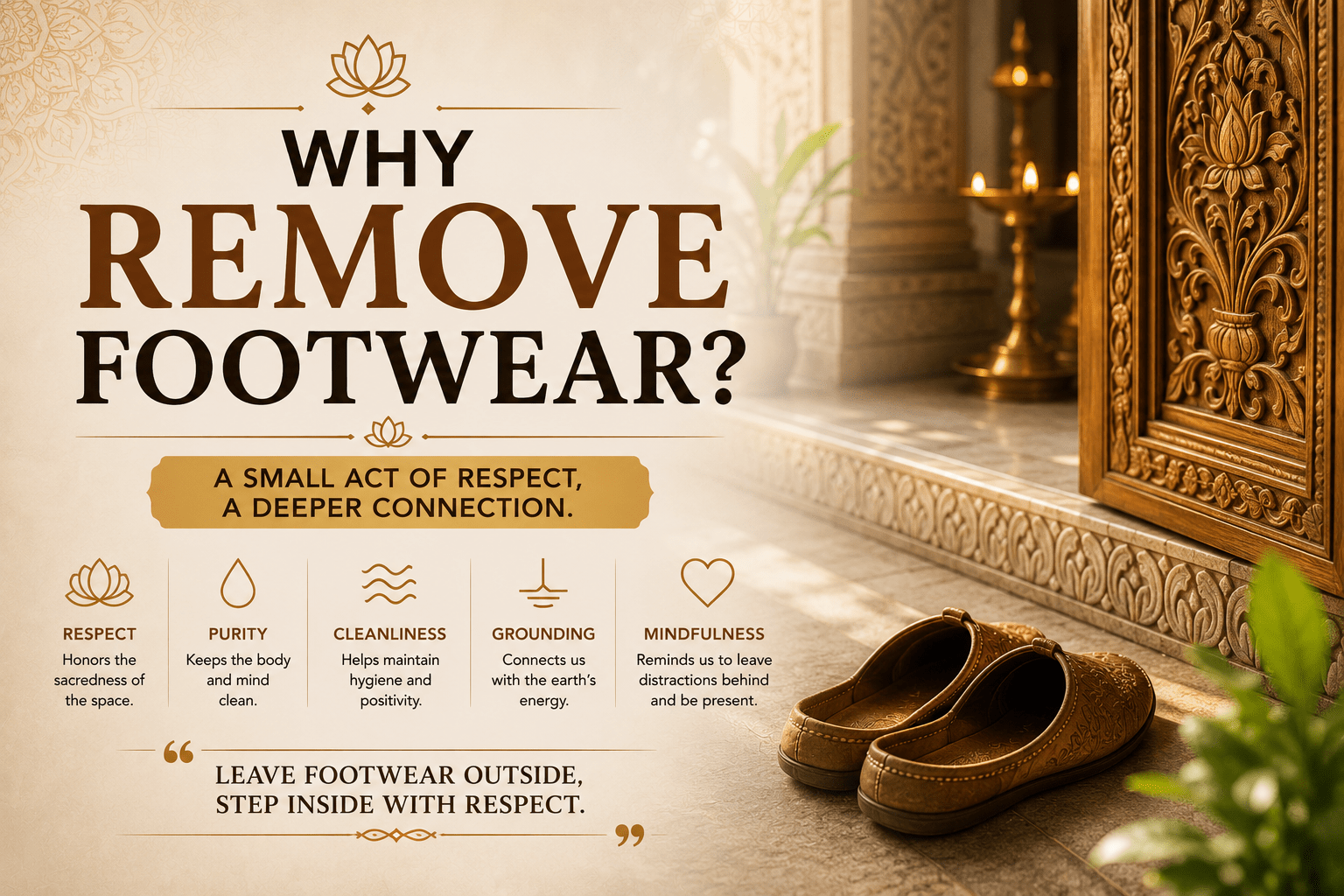
There is something symbolic about floor-based living. It brings everyday activities closer to the ground. You sit close to the earth. You eat together. You pray at a low altar. You remove your footwear. You sit with family. You become aware of your physical position. This is one reason so many traditional Indian practices involve the floor. The floor wasn’t simply where people happened to sit.
It was part of the way the home was designed and experienced.
Conclusion: Why Do Indians Sit on the Floor?
So, why do Indians traditionally sit on the floor?
The answer is a combination of culture, practicality, architecture, social customs and movement traditions.
🧘 Mobility
Floor sitting allows the body to experience different positions and movement ranges.
🪷 Tradition
It has been part of Indian household, religious and social life for generations.
🍛 Dining
Traditional meals are often enjoyed together while sitting on the floor.
🙏 Worship
Many prayer and meditation practices are traditionally performed close to the ground.
👨👩👧👦 Togetherness
Floor seating can bring families and communities physically closer.
🏡 Practicality
Floor-based spaces can be flexible and economical, especially in smaller homes.
🌿 Mindfulness
Changing position and sitting closer to the ground can increase awareness of the body and surroundings.
The modern world gave us comfortable chairs.
Ancient Indian life gave us something different:
the habit of getting down to the floor, sitting together and getting back up again.
Perhaps the real lesson isn’t that one way of sitting is better than another.
It’s that our bodies were designed to move through many positions — not remain in one chair all day.
So the next time you sit on the floor with your family, eat a traditional meal, or sit quietly near your home mandir, remember:
Sometimes an old tradition isn’t old-fashioned.
Sometimes it simply reminds us to move, connect and slow down. 🪷