




Why Is Sandalwood Used in Hindu Worship?
There is something instantly recognizable about the fragrance of sandalwood. Its soft, warm and distinctive aroma has been associated with temples, prayer rooms and traditional Indian rituals for centuries. You may have seen sandalwood paste, commonly called chandan, being applied to the forehead, offered during puja or used as part of religious rituals.
But why sandalwood?
Why did this particular wood become such an important part of Hindu worship?
The answer lies in a combination of tradition, fragrance, symbolism, ritual practice and the cultural value of sandalwood. Sandalwood is not simply another fragrant material used in puja. In many Indian traditions, it represents purity, devotion and the preparation of the mind for worship.
Let’s understand the deeper meaning behind this ancient practice.
-
What Is Sandalwood?
Sandalwood comes primarily from trees of the Santalum genus. The heartwood is particularly valued for its distinctive fragrance.Unlike many woods, sandalwood has a naturally persistent aroma, making it useful in traditional perfumery, religious practices and cultural rituals. In India, sandalwood has historically been considered a precious material. Its fragrance and association with sacred practices made it especially suitable for temples and worship. The word chandan generally refers to sandalwood paste prepared by rubbing sandalwood against a stone with a little water. The resulting paste can be used in different ritual contexts.
-
Why Is Sandalwood Used in Puja?
The simplest answer to why sandalwood is used in puja is its association with purity, fragrance and devotion. Traditional worship often involves offerings that engage multiple senses.
Devotees may offer:
- flowers
- incense
- lamps
- water
- food
- sandalwood
- sacred leaves
- fruits
Each offering has its own cultural and ritual context. Sandalwood contributes fragrance and is also valued as a sacred substance. Its use therefore turns the act of worship into a sensory experience. The fragrance of sandalwood can become associated with prayer itself.
-
Sandalwood Represents Purity
One of the important symbolic associations of sandalwood in Hindu worship is purity. Sandalwood’s clean, distinctive fragrance makes it an appropriate material for sacred rituals. In many traditions, purity is not limited to physical cleanliness. It can also refer to intention, thought and conduct. When sandalwood paste is applied during worship, it can therefore represent the desire to approach the divine with a calm and pure mind. This is one reason chandan continues to appear in traditional puja practices.
-
The Meaning of Chandan
The use of chandan in Hindu worship is particularly significant. Sandalwood paste may be applied to the forehead of a devotee or deity, depending on the particular tradition. The forehead has a strong symbolic importance in Indian spiritual traditions. The application of chandan can serve as a visible reminder of one’s religious identity, devotion or spiritual practice. However, practices vary considerably among Hindu traditions. There isn’t one universal meaning or method of applying sandalwood paste. In different communities, chandan may be used alongside other substances and markings according to specific customs.
-
Why Is Sandalwood Applied to the Forehead?
The forehead is traditionally associated with thought, awareness and spiritual focus in many Indian traditions. Applying sandalwood paste to the forehead can therefore carry symbolic meaning.
It can serve as a reminder to maintain:
- Calm thoughts.
Focused attention.
Devotional intention.
Some popular explanations connect sandalwood paste with cooling the forehead or calming the mind. While the sensory cooling effect of sandalwood paste can be real, broader claims about specific physiological or neurological effects should not be presented as scientifically established facts without evidence. The strongest interpretation remains symbolic and ritual:
Chandan reminds the devotee to approach worship with awareness and devotion.
-
Sandalwood Creates a Sacred Atmosphere
Fragrance plays an important role in many forms of worship. Incense, flowers, camphor and sandalwood can all contribute distinctive aromas to a temple or home shrine. Sandalwood’s fragrance is particularly associated with calmness and sacred spaces. When the aroma becomes part of a daily prayer routine, it can also create a familiar sensory association. You smell sandalwood. You see the diya. You hear the bell. You begin to pray. Over time, these sensory cues become closely connected with the experience of worship. This is one reason sandalwood in temple rituals has such a lasting cultural presence.
-
Sandalwood Is Associated With Cooling
Sandalwood has traditionally been regarded in Indian practices as cooling and soothing. Sandalwood paste can feel cool when applied to the skin, particularly when freshly prepared with water. This physical sensation has contributed to its cultural and ritual use. In traditional interpretations, the cooling quality of sandalwood can also be connected symbolically with maintaining calmness and reducing agitation. It is important, however, not to turn traditional associations into medical claims. The ritual significance of sandalwood exists independently of modern medical explanations.
-
Sandalwood as an Offering
During puja, offerings are made as expressions of respect, gratitude and devotion. Sandalwood can be offered because of its fragrance, purity and value. There is a beautiful idea behind offering something precious:
We offer the best we have in devotion.
Historically, high-quality sandalwood was not an ordinary household material. Its precious nature made it appropriate for special ritual contexts. The act of offering sandalwood therefore becomes more than simply adding fragrance. It can represent respect and surrender.
-
Why Is Sandalwood Used in Temples?
Temples are environments designed around ritual and sensory experience.
A traditional temple may contain:
- oil lamps
- flowers
- incense
- bells
- sacred chants
- water
- sandalwood
- devotional music
Sandalwood fits naturally into this environment because its fragrance contributes to the atmosphere. It is also connected with traditional rituals involving the deity. The exact use varies between temples and religious traditions. Some may use sandalwood paste extensively, while others may emphasize different ritual substances. Therefore, the significance of sandalwood in Hinduism should always be understood in its particular cultural context.
-
Sandalwood and Devotion
The value of sandalwood isn’t only physical. It is deeply connected with the idea of bhakti, or devotion. A devotee preparing sandalwood paste is performing an intentional act. The sandalwood has to be prepared. The paste has to be offered or applied. The ritual requires attention. That makes the material part of a larger devotional process. In this way, sandalwood becomes a reminder that worship is not simply about asking for something. It can also be about gratitude, humility and offering.
-
Why Does Sandalwood Feel So Special?
There are many fragrant materials available in India. So why did sandalwood become particularly important?
Several qualities make it distinctive:
- Natural fragrance
Sandalwood has a recognizable, long-lasting aroma.
- Workability
The wood can be shaped and carved, making it valuable beyond ritual use.
- Cultural history
Sandalwood has been associated with Indian religious and artistic traditions for centuries.
- Symbolic value
Its fragrance and preciousness contributed to its association with sacred offerings.
- Sensory experience
Its aroma and the cooling feel of sandalwood paste complement ritual practices.
Together, these qualities explain its enduring place in Indian culture.
-
Sandalwood and Traditional Indian Craftsmanship
Sandalwood isn’t only connected with worship. It has also played an important role in Indian craftsmanship.
Artisans have traditionally carved sandalwood into:
- religious figures
- decorative objects
- boxes
- panels
- ritual items
- miniature sculptures
Its fine texture and fragrance make it particularly suited to detailed carving. This creates an interesting connection between worship and craftsmanship. The same material can be used as an offering in a temple and as a medium for creating sacred art.
-
Sandalwood in the Modern Indian Home
The tradition hasn’t disappeared. Even in modern apartments, sandalwood may still be part of a family’s prayer routine. A small amount of chandan may be kept near the home mandir and used during daily puja or festivals. This demonstrates how ancient traditions adapt to contemporary lifestyles.
A modern home may have:
- a compact poojamandir
- an electric or traditional diya
- brass accessories
- a small bell
- incense
- sandalwood paste
The space may be modern in design while the ritual remains deeply traditional.
-
Is Sandalwood Scientifically Proven to Purify the Atmosphere?
You may come across claims that sandalwood literally purifies the air or removes negative energy. These statements need to be treated carefully. Sandalwood has a distinctive fragrance, and its aromatic compounds are well known for their use in perfumery and traditional practices. However, claims that sandalwood spiritually or scientifically eliminates supernatural negative energy are not established scientific facts. The spiritual significance of sandalwood does not depend on proving such claims. Its role in Hindu worship is rooted primarily in tradition, symbolism, devotion and ritual practice.
-
Sandalwood and Sustainability
There is another important issue that modern devotees should understand. Natural sandalwood is a valuable resource, and sandalwood species have faced significant pressure from harvesting and trade. Responsible sourcing matters. If sandalwood is being purchased for religious use, consumers should prefer legally sourced and responsibly produced products wherever possible. Tradition and environmental responsibility do not need to conflict. In fact, respecting nature can itself be viewed as consistent with the broader Indian cultural appreciation for the natural world.
-
Sandalwood Is More Than a Fragrance
When we smell sandalwood today, we may simply think of incense or perfume. But in the context of Hindu worship, it can carry a much deeper cultural memory.
It can remind us of:
Temple bells.
Morning prayers.
Fresh flowers.
Oil lamps.
Sanskrit mantras.
Festivals.
Family traditions.
Ancient temples.
This is the real power of ritual objects. They connect the present generation with practices that have been carried forward over centuries.
Conclusion: Why Is Sandalwood Used in Worship?
So, why sandalwood is used in worship comes down to several interconnected ideas.
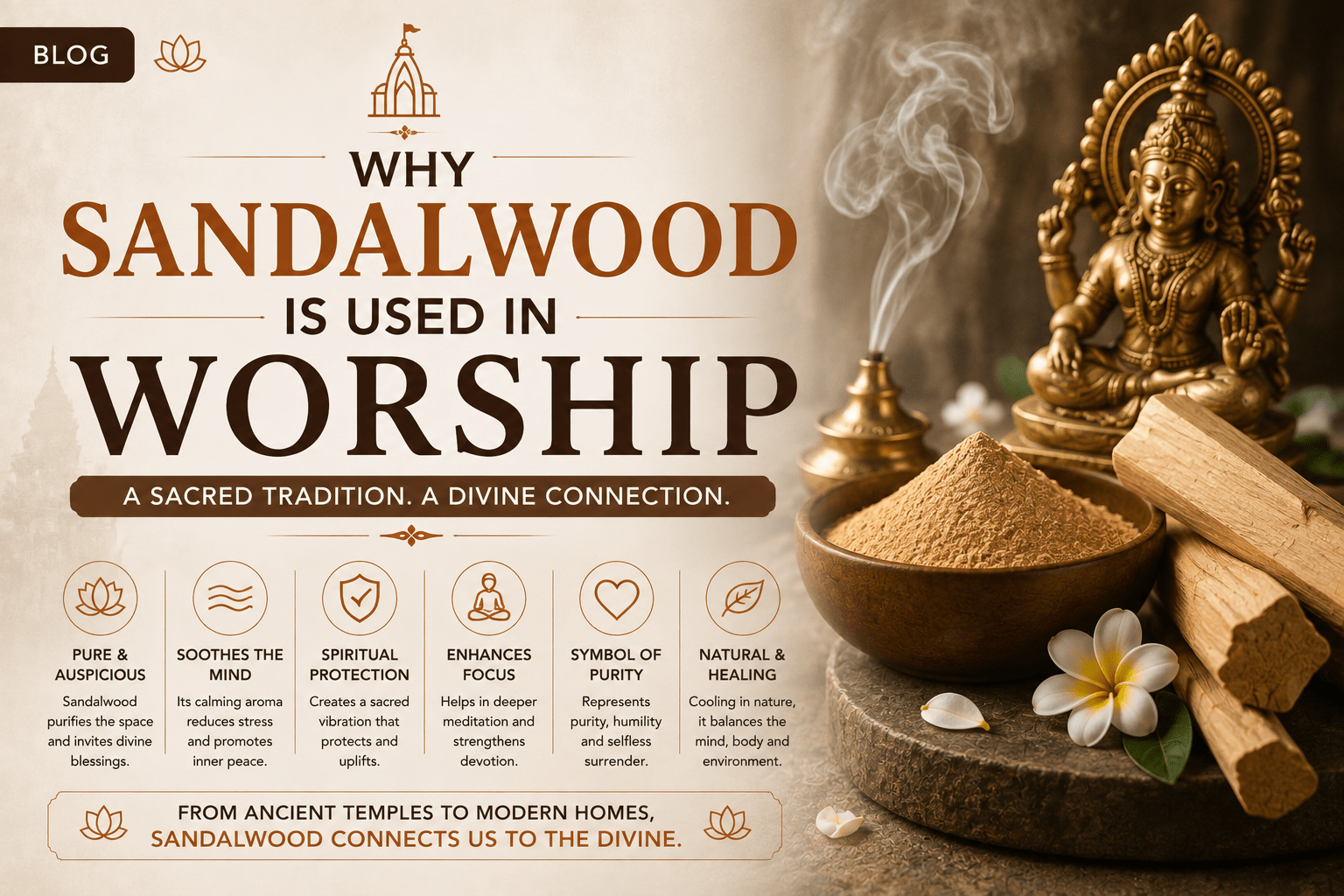
🌿 Purity — sandalwood is traditionally associated with cleanliness and sacredness.
🪔 Devotion — offering chandan can express reverence and surrender.
🌸 Fragrance — its distinctive aroma contributes to the sensory atmosphere of worship.
🧘 Calmness — its traditional cooling and soothing associations complement prayer.
🙏 Ritual — sandalwood forms part of many Hindu puja and temple traditions.
🎨 Craftsmanship — sandalwood has also been an important material for traditional Indian carving.
🌳 Connection with nature — the natural material reminds us of the relationship between ritual and the natural world.
The next time you see sandalwood being prepared for puja, look beyond its fragrance. It isn’t simply a piece of wood.
It represents a tradition where nature, craftsmanship, devotion and ritual come together.
And perhaps that’s why its fragrance feels so familiar in a sacred space.
**Sandalwood isn’t just a fragrance.
It is a memory of prayer.
A symbol of devotion.
And a connection between tradition and the divine.** 🌿🙏