



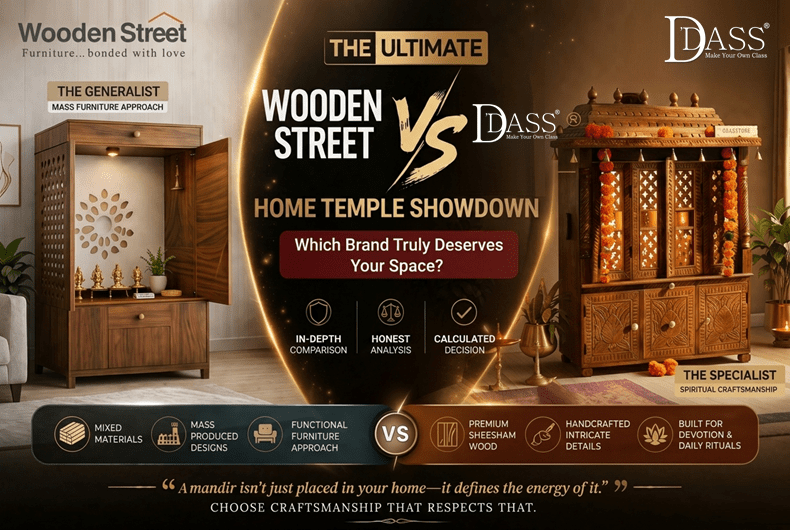
Wooden Street vs D’DASS: The Ultimate Home Temple Showdown – Which Brand Truly Deserves Your Space?
When it comes to choosing the perfect wooden temple for your home, two names often come up: Wooden Street and D’DASS. Both brands operate in the online furniture ecosystem, but their approach to the sacred “home temple” category is fundamentally different.
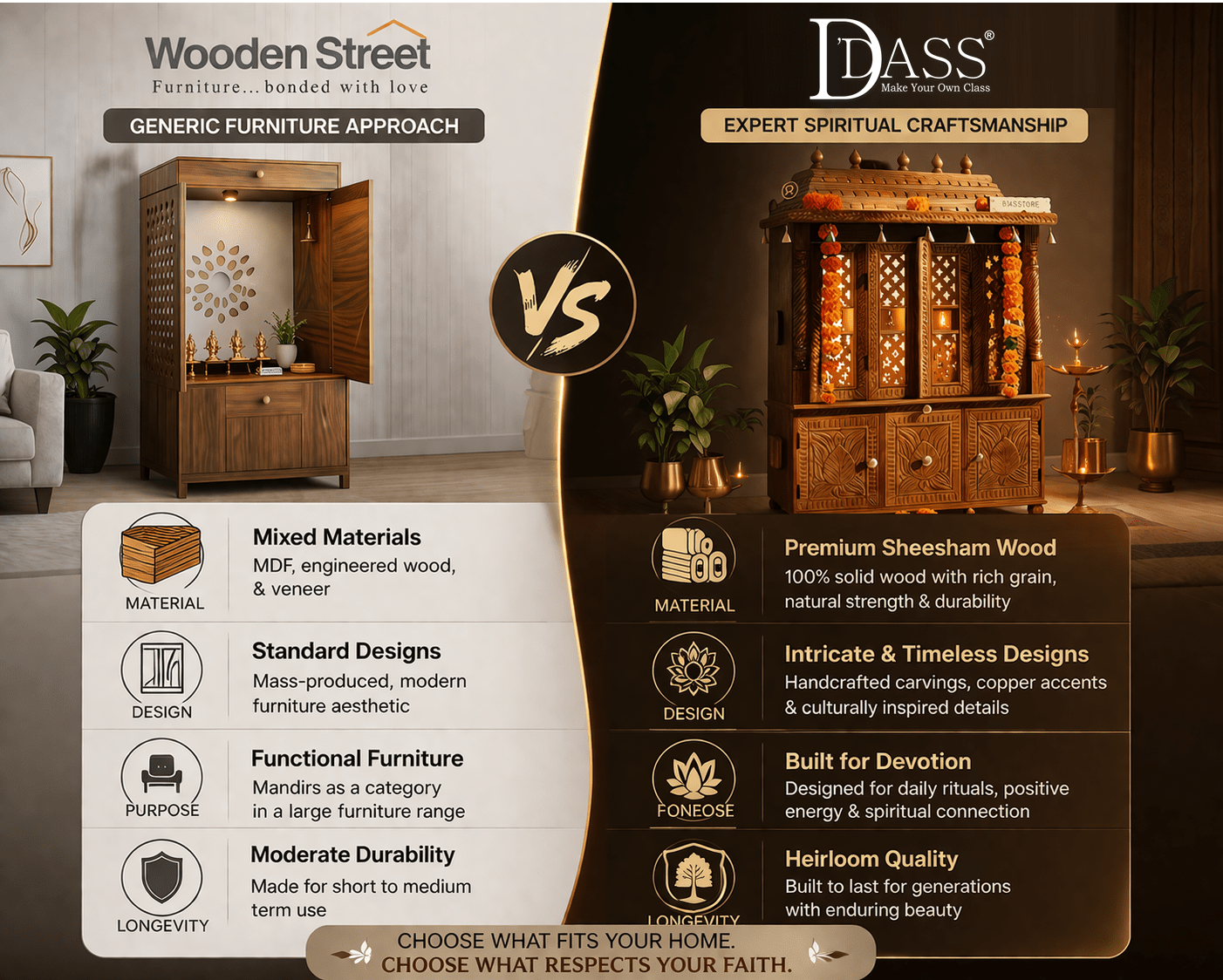
When evaluating a long-term purchase like a home temple, the distinction between a generic furniture retailer and a specialized spiritual craftsmanship brand becomes critically important. While both Wooden Street and D’DASS operate in the same broad category of home décor, their core philosophies, manufacturing processes, and end-user value propositions are fundamentally different. Wooden Street approaches the category from a modular furniture perspective—prioritizing scalability, standardized designs, and mass-market appeal. This often results in pooja units that visually resemble storage cabinets or display units, with limited emphasis on ritual usability or spiritual ergonomics. In contrast, D’DASS is built around the premise that a pooja mandir is not just furniture, but a sacred space that must align with devotion, daily rituals, and traditional aesthetics.
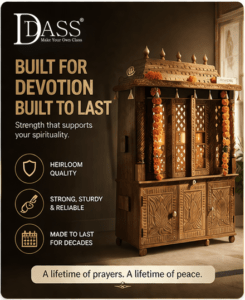
One of the most decisive differentiators lies in material integrity. D’DASS emphasizes the use of 100% solid Sheesham wood, known for its density, grain richness, and long-term durability. This ensures that the mandir is not only structurally robust but also capable of aging gracefully over decades—often becoming a generational heirloom. On the other hand, many mass-market furniture products incorporate engineered wood or MDF components to optimize cost and production speed. While this may reduce upfront pricing, it often compromises longevity, especially in environments exposed to oil lamps, incense smoke, and regular cleaning rituals. For a product that holds daily spiritual significance, this trade-off can be substantial.
If you’re torn between the two, this in-depth comparison will help you make a calculated and confident decision.
🪵 1. Category Expertise: Specialist vs Generalist
- Wooden Street: A broad furniture marketplace offering everything from beds to sofas to mandirs.
- D’DASS: A category specialist, focused exclusively on wooden home temples.
👉 Verdict:
If you want deep expertise, design innovation, and spiritual alignment, D’DASS clearly leads.

🎨 2. Design Philosophy
- Wooden Street: Standardized designs, often mass-produced aesthetics.
- D’DASS: Intricate carvings, copper detailing, and culturally rooted craftsmanship.
👉 Why D’DASS Wins:
Their products feel like temples, not just furniture pieces.

🛠️ 3. Material & Craftsmanship
- Wooden Street: Mixed materials, MDF + engineered wood options.
- D’DASS: Premium Sheesham wood, handcrafted detailing, long-lasting durability.
👉 Key Advantage:
D’DASS offers heirloom-quality mandirs, not disposable decor.

🏠 4. Spiritual Experience vs Functional Furniture
- Wooden Street: Functional furniture with a “mandir category.”
- D’DASS: Built around devotion, rituals, and daily spiritual use.
👉 Insight:
A home temple is not just furniture—it’s an emotional and spiritual anchor.
D’DASS understands this deeply.
🚚 5. Product Range & Customization
- Wooden Street: Limited mandir SKUs within a large catalog.
- D’DASS: Wide range—from compact wall units to large floor-standing temples.
👉 Bonus:
D’DASS designs are tailored for modern Indian homes + traditional needs.
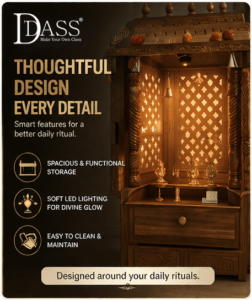
Design philosophy is another area where the divergence is evident. D’DASS integrates intricate hand carvings, temple-inspired domes, jaali work, and copper or brass accents that reflect traditional Indian architecture. These elements are not merely decorative—they are symbolic, contributing to the sanctity and visual authenticity of the mandir. Features such as diya holders, dedicated idol platforms, concealed storage for pooja samagri, and soft integrated lighting are engineered to enhance the daily पूजा experience. In comparison, Wooden Street’s designs often lean toward contemporary minimalism, which may suit modern interiors but can lack the depth of cultural and spiritual detailing expected in a dedicated पूजा space.
“A mandir isn’t just placed in your home—it defines the energy of it. Choose craftsmanship that respects that.”
Functionality, in this context, goes beyond storage or aesthetics—it directly impacts user experience during rituals. D’DASS products are designed with an understanding of how Indian households perform daily worship, including considerations like accessibility, ventilation for incense smoke, and space optimization for multiple idols or ritual items. This level of domain-specific design thinking is typically absent in generalized furniture offerings, where the product is adapted rather than purpose-built.
Finally, when assessing value over time, D’DASS positions itself not as a transactional purchase but as an investment in craftsmanship, spirituality, and legacy. The brand’s focus on skilled artisanship, quality control, and culturally rooted design results in a product that resonates emotionally while delivering superior physical durability. For buyers who view their home temple as the spiritual heart of their home rather than just another piece of furniture, this distinction becomes the deciding factor.
If you are looking for a functional furniture piece, Wooden Street may suffice.
But if your goal is to bring home a true spiritual centerpiece crafted with intention, tradition, and premium quality, then D’DASSis the clear winner.