





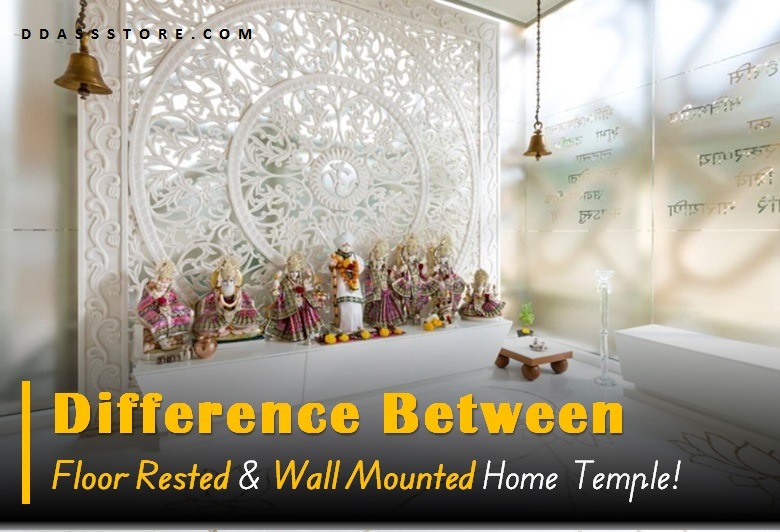
Floor-Rested vs. Wall-Mounted Home Temple: A Detailed Comparison for Your Home | D’DASS Store
Creating a sacred space at home is an important part of many Indian households. Whether you perform daily rituals or occasional prayers, having a dedicated home temple—often called a pooja mandir, puja unit, or home shrine—creates an environment of peace and spiritual grounding. With modern homes adopting different layouts and interior design styles, choosing the right type of mandir becomes essential.
Among the most popular choices are floor-rested home temples and wall-mounted home temples. While both serve the same spiritual purpose, they differ in size, style, placement, and functionality. In this detailed guide, we dive deep into the difference between floor-rested and wall-mounted home temple, helping you choose the perfect option for your home.
📌 What Is a Floor-Rested Home Temple?
A floor-rested home temple (also called a floor-standing pooja mandir) is a unit placed directly on the floor. It resembles a mini temple with a base, pillars, storage shelves, and sometimes a dome or ornate carvings. These mandirs are typically more traditional and larger in structure.
Key Characteristics
- Placed directly on the floor
- Offers large space for idols and decorations
- Often comes with storage drawers/cabinets
- Available in wood, marble, MDF, and metal designs
- Supports traditional pooja rituals like diya lighting, sitting on the floor for prayer, etc.
📌 What Is a Wall-Mounted Home Temple?
A wall-mounted home temple is a compact unit fixed directly to the wall. Modern, minimalist, and space-saving, these mandirs are ideal for apartments and compact homes.
Key Characteristics
- Installed on any wall (living room, hallway, balcony, or bedroom corner)
- Lightweight and sleek
- Minimal or no storage
- Suitable for smaller idols and a clutter-free pooja corner
- Available in wood, MDF, acrylic, and metal
Which One Should You Choose?
Choosing between a floor-rested home temple and a wall-mounted home temple depends entirely on your space, lifestyle, worship habits, and interior design preferences. Here’s a quick decision guide:
| Condition | Best Choice |
|---|---|
| Small apartment | Wall-mounted temple |
| Large spacious home | Floor-standing temple |
| Frequent elaborate pooja | Floor-rested mandir |
| Minimal daily rituals | Wall-mounted mandir |
| Traditional décor | Floor-standing wooden or marble mandir |
| Modern décor | Wall-mounted MDF or acrylic mandir |
| Need more storage | Floor-rested pooja mandir |
| Budget-friendly option | Wall-mounted unit |
Popular Materials for Both Types of Home Temples :
For Floor-Rested Mandirs
- Solid Sheesham wood
- Mango wood
- Teak wood
- Marble
- Designer MDF with laminate
For Wall-Mounted Mandirs
- MDF with CNC jaali
- Plywood with laminate
- Acrylic
- Light metal mandirs
- Compact wood
🧿 Vastu Tips for Placing Your Home Temple
Regardless of type, follow these vastu guidelines:
- Place your mandir in the northeast (Ishan) direction
- Idols should face east or west
- Avoid placing mandir in bedrooms, bathrooms, and beneath staircases
- Keep the space clean and clutter-free
- Do not place broken idols
Both floor-rested and wall-mounted home temples offer unique advantages. The right choice depends on your home layout, space availability, pooja habits, décor preferences, and budget. If you love tradition, spacious designs, and full-fledged puja rituals, a floor-standing mandir is perfect. For modern compact homes or minimalistic interiors, a wall-mounted pooja unit offers style and practicality.
Whichever you choose, your home temple should be a serene, sacred space that brings positivity, peace, and spiritual comfort.